About

Hello, I am an Astrophysicist based at the OU Cosmic Ecosystems group in the Department of Physics and Astronomy, University of Oklahoma, where I hold a Postdoctoral position. I grew up in Hyderabad, India, and received my bachelor's degree in Astronomy from the Indian Institute of Space Science and Technology, Thiruvananthapuram, India, before assuming a scientist position at the Physical Research Laboratory (PRL), Gujarat, India. I then moved overseas to pursue my PhD from Penn State, where my advisor was Jane Charlton.

While I am broadly interested in many aspects of observational galaxy formation, summed up in one sentence, my main research goal is using absorption spectroscopy to learn about the physicochemical properties of the diffuse gas surrounding galaxies called the circumgalactic medium (CGM). The CGM mediates the exchange of baryons and metals between galaxies and the intergalactic medium, and understanding its properties is therefore essential to understanding how galaxies form, grow, and evolve.

I observe this CGM gas using both ground and space-based telescopes like the Keck and Hubble. Much of my work involves the development and application of software and novel methods that utilize ionization modeling, Bayesian inference, and high-performance computing. I am the lead developer of the open-source ionization modeling suite Cloud-by-cloud, Multiphase, Bayesian ionization modeling (CMBM). This suite is aimed at making inference of ionization conditions in diffuse gaseous media a breeze.

My CV is available here
Research

Below is a summary of my published work, organized by my role in each project, with a short account of my specific contribution to each paper and a figure highlighting a key result.

First Author

OVI dichotomy

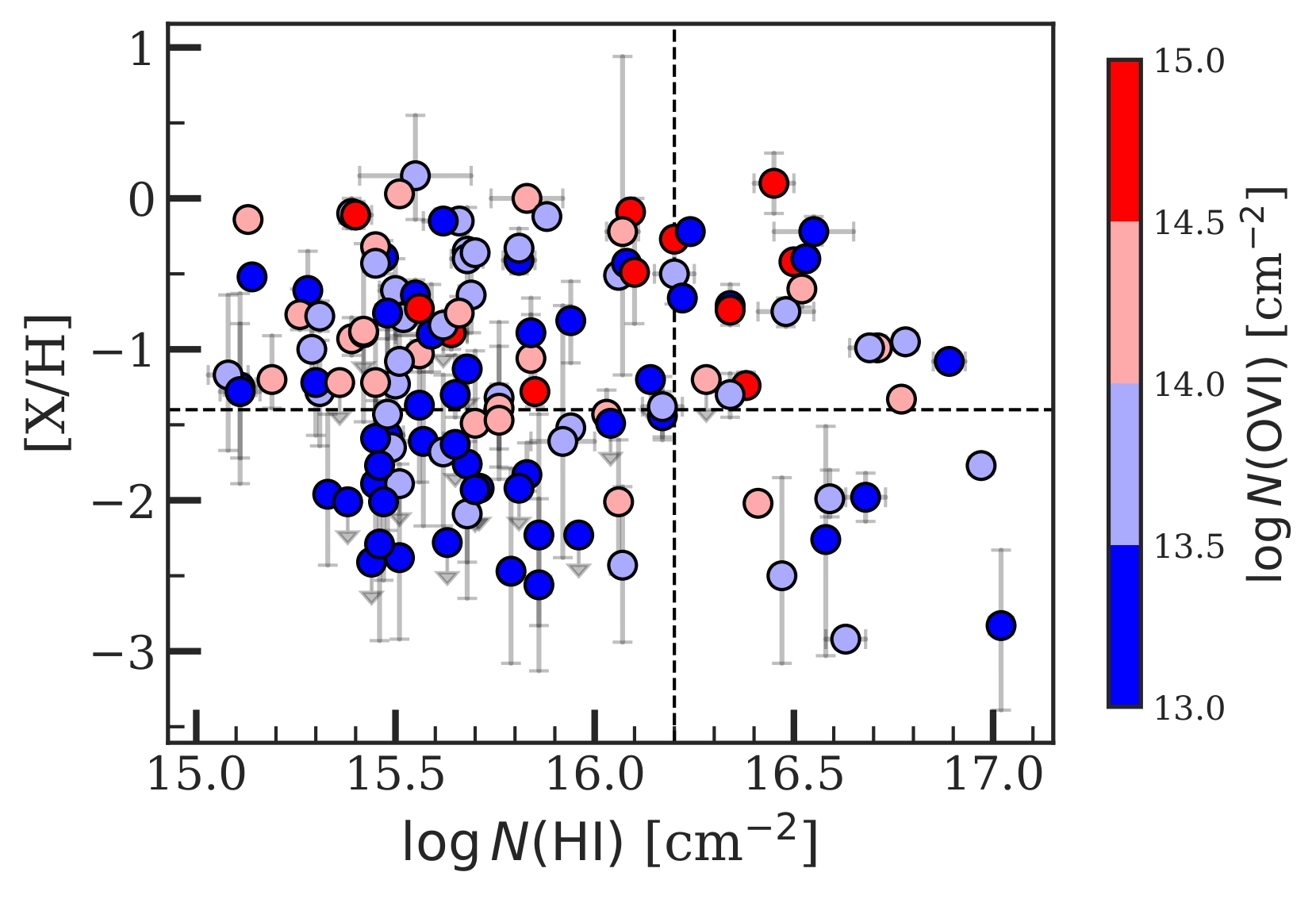
Metallicity vs. H I column density for CGM absorbers, color-coded by O VI column density, revealing a clear dichotomy between O VI-bearing and O VI-deficient systems.

Sameer et al. 2024, ApJ, 975, 264

The COS CGM Compendium. V. The Dichotomy of O VI Associated with Low- and High-metallicity Cool Gas at z < 1

Using cloud-by-cloud, multiphase Bayesian ionization modeling applied to 75 CGM absorbers from the COS CGM Compendium, I find that O VI absorption preferentially traces high-metallicity cool gas. Systems with log Z/Z > −1 show a high O VI detection rate, while metal-poor systems are predominantly O VI-deficient — a dichotomy that persists across a wide range of H I column densities. This metallicity dependence implies that O VI is not a universal tracer of warm CGM gas but instead preferentially marks recycled or metal-enriched material, challenging simple models that treat O VI as a uniform probe of the warm-hot CGM phase.

Metallicity vs azimuthal angle

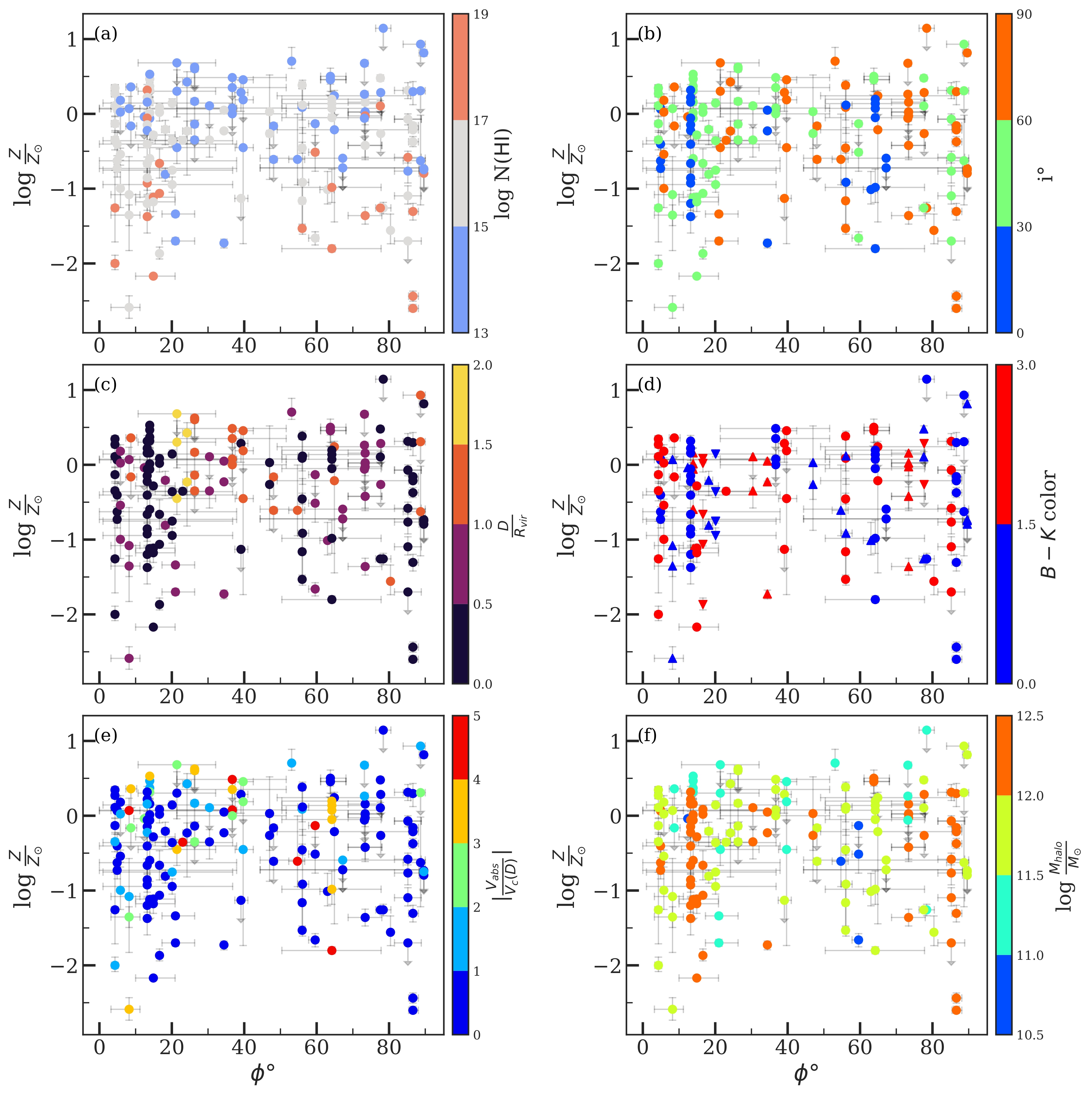
CGM metallicity as a function of azimuthal angle and galaxy properties for 47 galaxy–QSO pairs. No significant azimuthal dependence is found.

Sameer et al. 2024, MNRAS, 530, 3827

Cloud-by-cloud multiphase investigation of the circumgalactic medium of low-redshift galaxies

Applying cloud-by-cloud, multiphase Bayesian ionization modeling to a sample of 47 galaxy–QSO pairs at low redshift, I find that CGM metallicity shows no dependence on azimuthal angle. Inclination, impact parameter, B−K colours, H I column density subpopulations, and absorber velocities are similarly uncorrelated with metallicity. This lack of a metallicity–azimuthal angle connection challenges simple bimodal CGM models where outflows dominate the minor axis and accretion the major axis.

Leo Ring sightline map

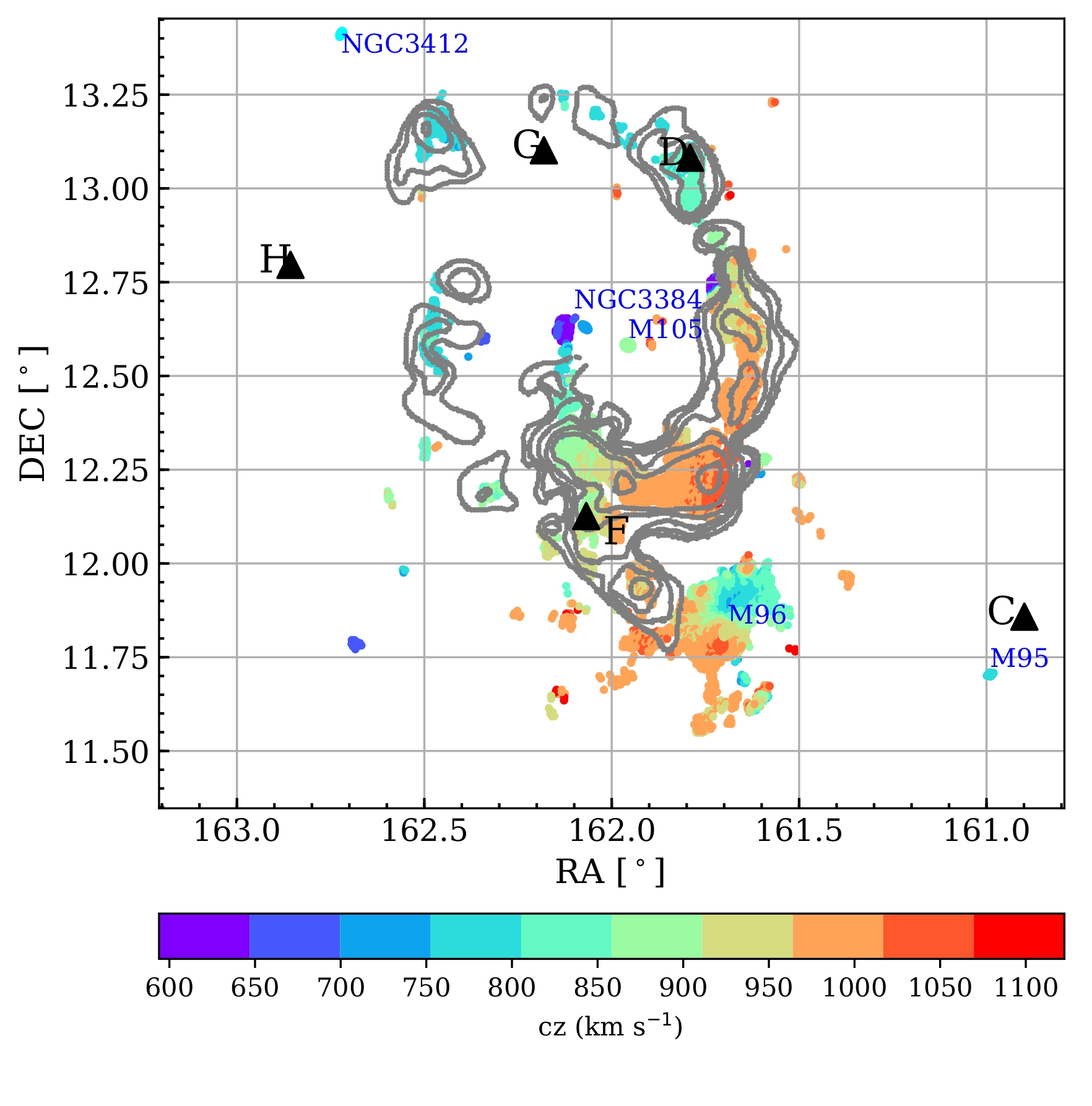
Spatial distribution of 11 HST/COS quasar sightlines probing the Leo Ring and Leo I Group environment, overlaid on an H I map. Sightlines are color-coded by the metallicity of the detected CGM absorbers.

Sameer et al. 2022, MNRAS, 510, 5796

Probing the physicochemical properties of the Leo Ring and the Leo I group

Using 11 HST/COS sightlines probing the Leo Ring and Leo I group environment, I apply CMBM to characterize the physical and chemical conditions of this unique intragroup H I structure. The absorbers show generally high metallicities — at or above solar — consistent with an origin as tidal debris from a past galaxy–galaxy interaction rather than pristine accreted IGM gas.

Watch summary video

CMBM workflow flowchart

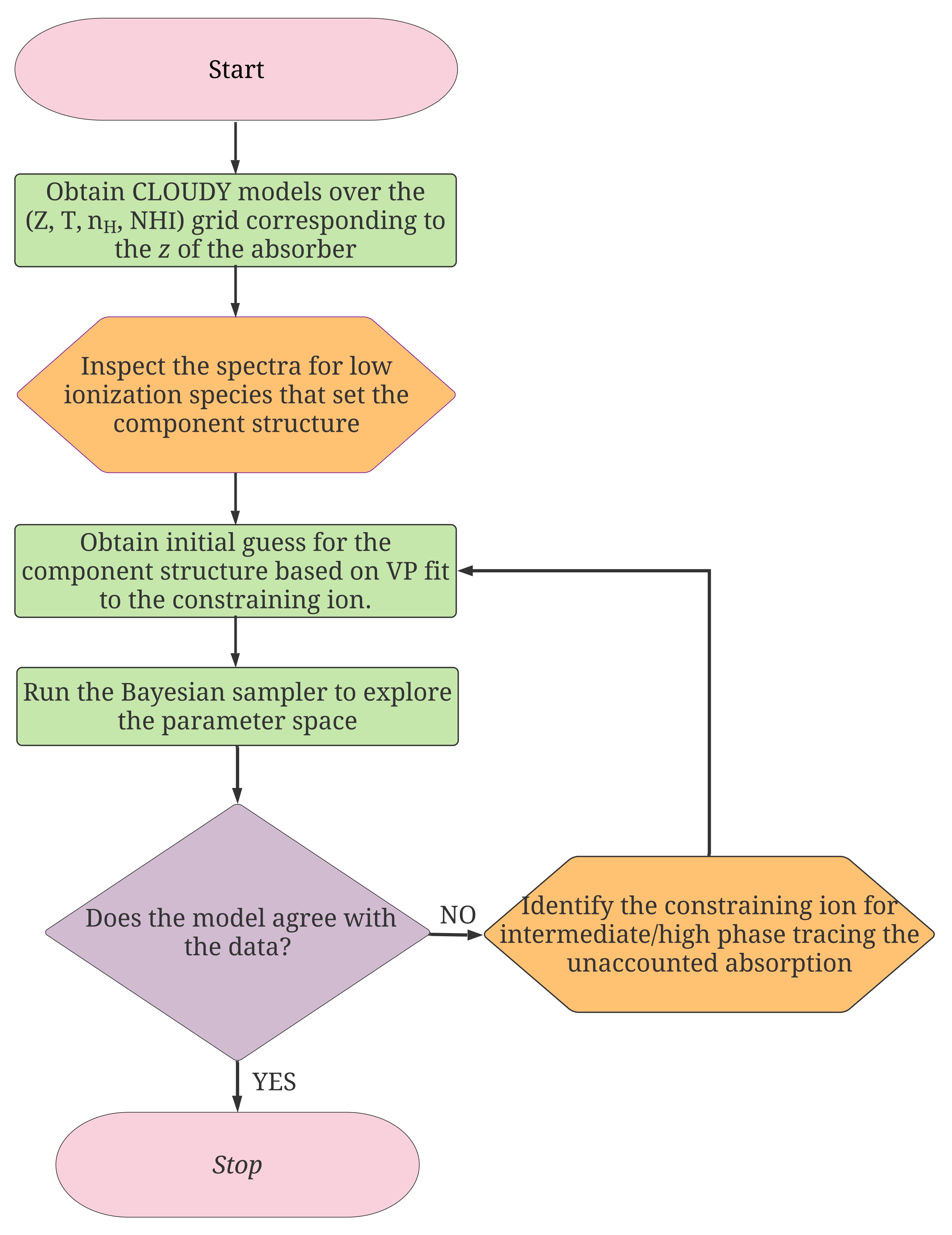
Flowchart illustrating the CMBM pipeline — from Voigt profile decomposition through Cloudy grid generation and nested sampling to final posterior distributions of metallicity, density, temperature, and cloud size.

Sameer et al. 2021, MNRAS, 501, 2112

Cloud-by-cloud, multiphase, Bayesian modelling: application to four weak, low-ionization absorbers

This paper introduces the CMBM method — a framework for extracting the physical conditions of individual absorbing clouds along quasar sightlines using Cloudy photoionization models combined with nested sampling via PyMultiNest. Applied to four weak, low-ionization CGM absorbers at low redshift, the method yields posterior distributions of metallicity, hydrogen number density, temperature, and cloud size for each component. CMBM moves beyond single-phase averaged models to reveal the true multiphase complexity of CGM absorbers, and has since become the backbone of my research program.

Watch summary video

Transforming BAL quasar spectra

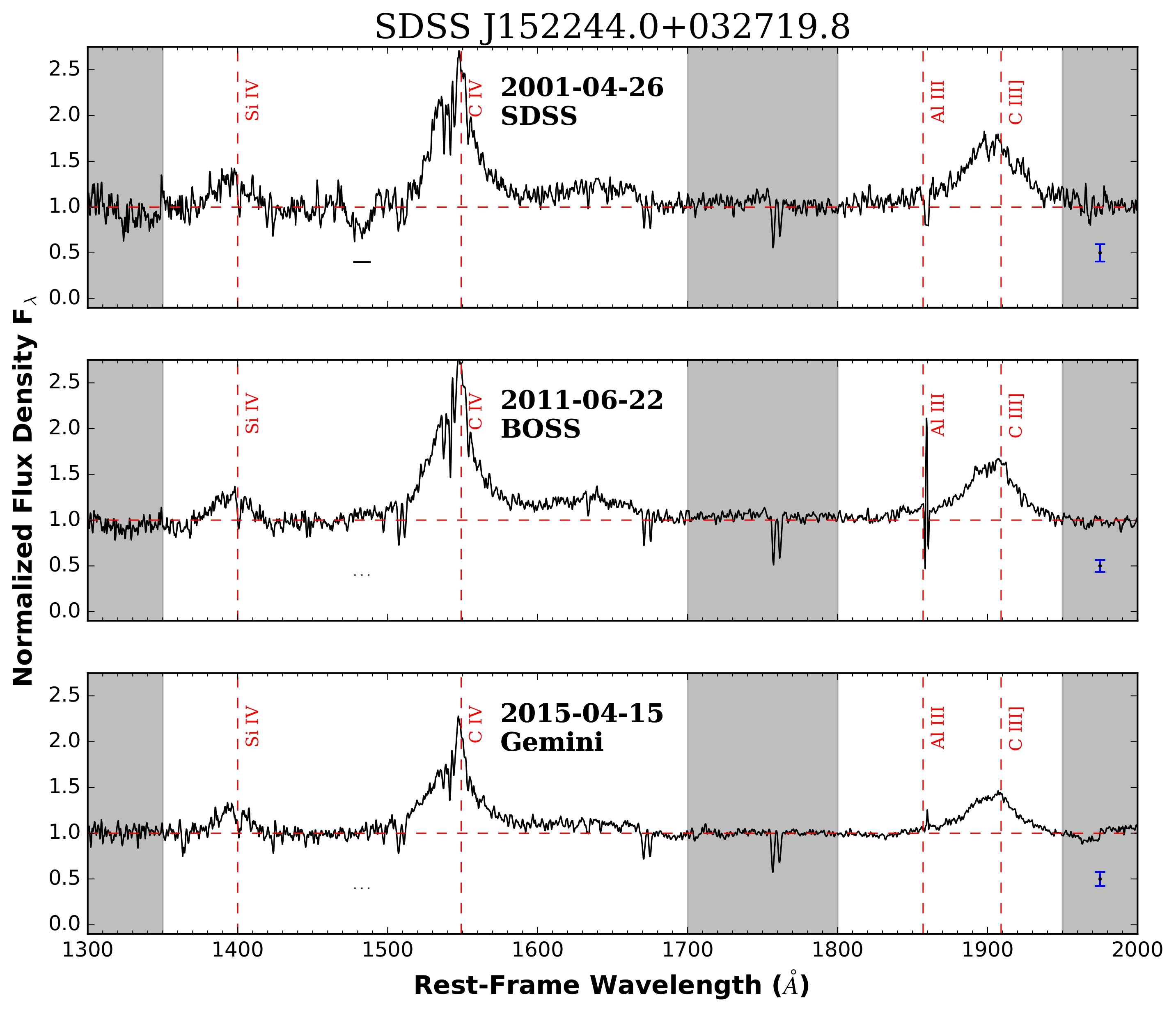
Normalized optical spectra across multiple epochs for a representative transforming BAL quasar. Gray shaded regions mark the relatively line-free windows used for the continuum fit. The horizontal black solid line marks the C IV BAL region in the first SDSS epoch; the corresponding dotted lines in the later BOSS and Gemini spectra show that the BAL trough has disappeared. Median error bars on the normalized flux density are shown at bottom right of each panel.

Sameer et al. 2019, MNRAS, 482, 1121

X-ray and multi-epoch optical/UV investigations of BAL to non-BAL quasar transformations

I present an X-ray and multi-epoch optical/UV investigation of eight quasars that transformed from broad absorption line (BAL) to non-BAL systems, combining new Chandra observations with contemporaneous Gemini and ARC 3.5-m spectroscopy to test whether the disappearance of UV BAL troughs is accompanied by a corresponding change in X-ray absorption. The BAL troughs, once vanished in the SDSS-to-BOSS transition, remain absent in the new optical/UV spectra years later. The X-ray data show these transforming quasars have αox and Δαox values statistically consistent with non-BAL quasars and distinct from both HiBAL and LoBAL populations, and joint spectral fitting yields an effective photon index of Γ = 1.69+0.25−0.25 — much softer than typical BAL quasars and consistent with negligible intrinsic X-ray absorption. Combined with IR-to-X-ray spectral energy distributions that closely track the non-BAL quasar composite, these results indicate that the X-ray absorbing material has largely moved out of the line of sight, favoring a picture in which reduced shielding-gas column allows increased ionizing flux to reach — and dissipate — the UV BAL wind.

Significant Contribution (second/third author)

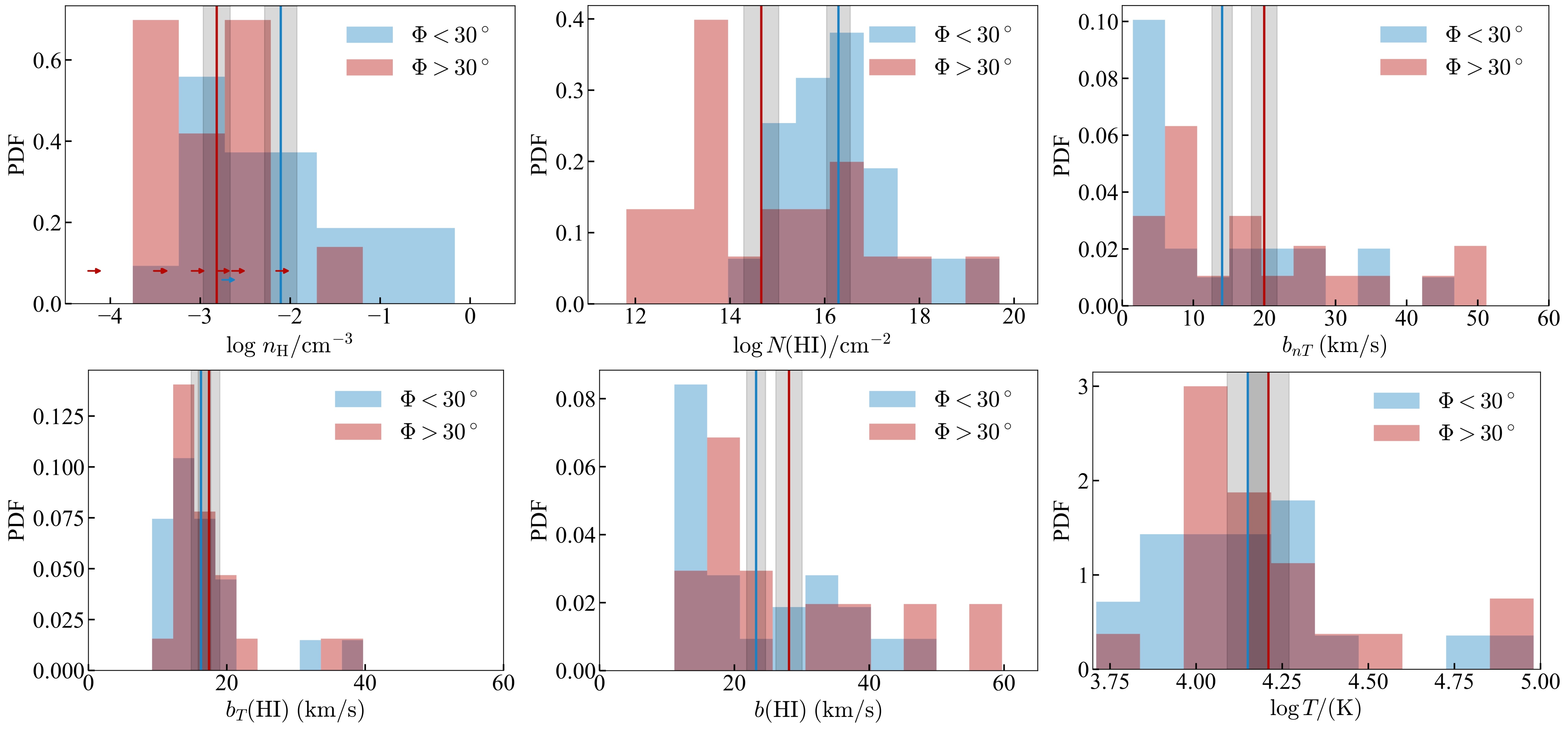
Kacprzak et al. 2026 physical parameters by azimuthal angle

Probability distribution functions of the physical parameters for the rotation-consistent PIE (photo-ionisation equilibrium) cloud population, split at Φ = 30°. Major-axis dominated clouds (Φ < 30°, blue) are compared to clouds at larger azimuthal angles (Φ > 30°, red). Panels show, from left to right, H I column density, hydrogen density, temperature, total Doppler parameter, the thermal Doppler component, and the non-thermal component. Major-axis clouds show systematically higher H I column density and density, and lower non-thermal broadening, while temperature and thermal broadening are statistically consistent — indicating the separation is dynamical rather than thermal in origin.

Kacprzak, Doran, Sameer et al. 2026, arXiv:2607.14359

The chemodynamical signature of coherent metal-poor inflow and enriched recycled accretion in the cool circumgalactic medium

I provided the cloud-by-cloud multiphase Bayesian ionization modeling (CMBM) column densities, metallicities, densities, and temperatures (from Sameer et al. 2024, MNRAS) that underpin this analysis. Cross-matching the CMBM cloud catalog with galaxy rotation kinematics from Nateghi et al. 2024 for 21 galaxies, this work finds that once CGM clouds are separated by both ionization phase and kinematic behavior, a clear chemodynamical signature emerges: low-ionization (PIE) clouds co-rotating with the host galaxy are ~0.5 dex more metal-poor near the projected major axis (Φ < 30°) than at larger azimuthal angles, and also show higher H I column density, higher density, and reduced non-thermal broadening — with no corresponding temperature offset, demonstrating the separation is dynamical rather than thermal. This is consistent with dynamically cold, metal-poor filamentary inflow along the disk plane, while co-rotating clouds at larger azimuthal angles are more enriched and turbulent, consistent with angular-momentum-supported recycled accretion rather than ballistic outflows. The higher-ionization TDP phase shows no significant azimuthal metallicity trend and is hotter, more diffuse, and more dynamically complex, indicating it traces a distinct CGM component less tightly coupled to disk kinematics.

MgII component photoionization models

Synthetic profiles from CMBM overlaid on the absorption data for the ultrastrong Mg II system at z ≈ 1.13, covering Ca II, Fe II, Mg I, and Mg II transitions across 26 kinematic components.

Udhwani, Sameer et al. 2025, ApJ, 995, 97

Kinematic Analysis of an Ultrastrong Mg II Absorber at z = 1.13 Linked to Circumgalactic Gas Structures

As second author and research advisor to Purvi Udhwani, I led the CMBM modeling for this ultrastrong Mg II absorber at z ≈ 1.13, requiring 26 kinematic components. The system spans Wr = 3.185 Å and log N(H I) ≈ 22.5. The cloud-by-cloud modeling reveals a multiphase structure with metallicities ranging from sub-solar to super-solar, and kinematics inconsistent with pure disk rotation — pointing to a complex CGM environment likely shaped by galaxy interactions or group-scale gas flows.

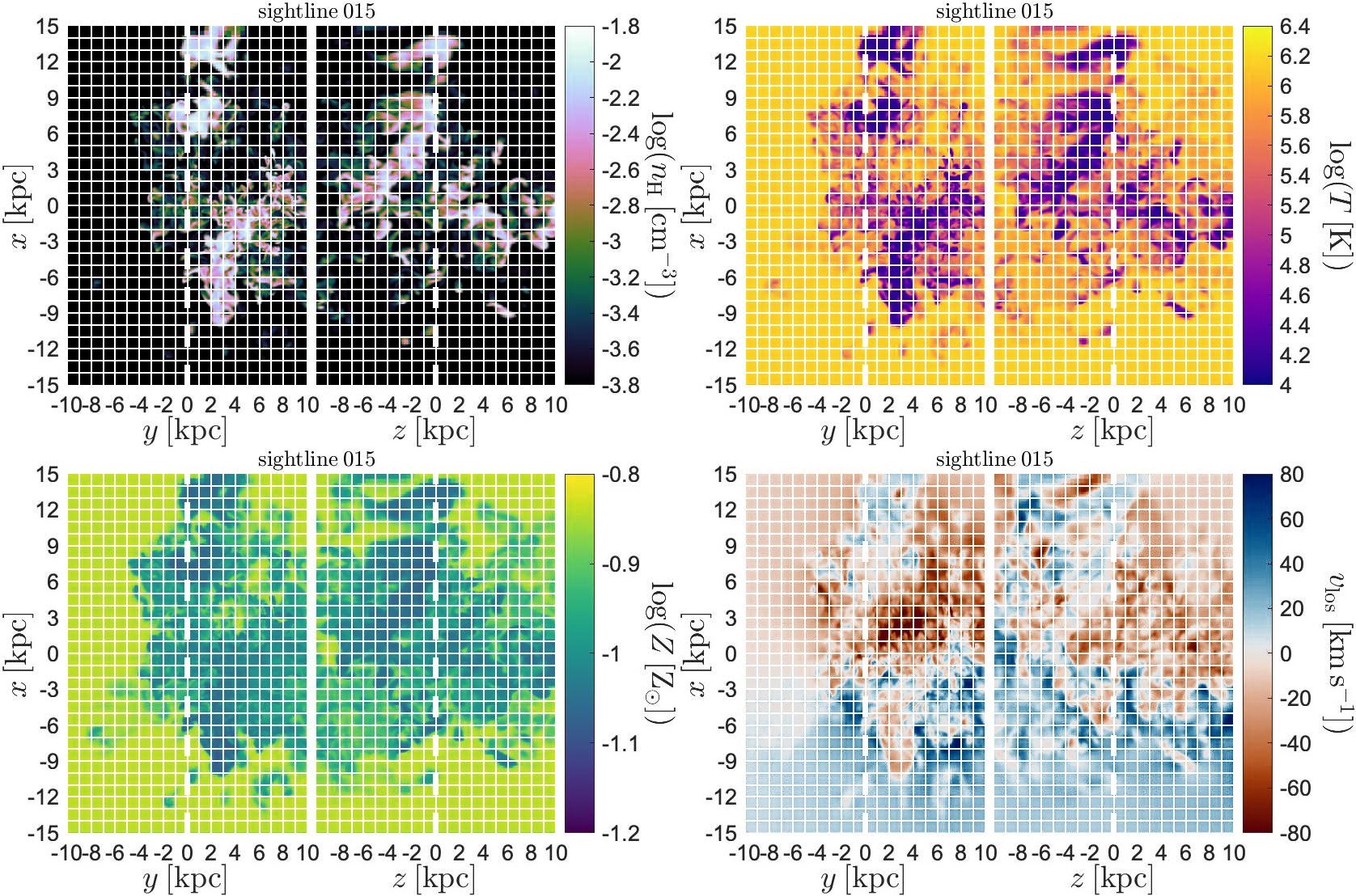
Halo21 turbulent mixing zone simulation slice

Density, temperature, metallicity, and line-of-sight velocity in a slice of the simulation used to generate the turbulent mixing zone sample. The dashed white line marks the location of one of the sightlines (sightline 15) forward-modeled to produce mock spectra. The simulation shows highly complex cloud structure; a 1 kpc grid is overlaid to help gauge cloud size.

Hafen, Sameer et al. 2024, MNRAS, 528, 39

The Halo21 absorption modelling challenge: lessons from observing synthetic circumgalactic absorption spectra

As second author and one of the primary modelers, I applied CMBM to synthetic CGM absorption spectra drawn from a turbulent mixing zone simulation — the most physically realistic and challenging of the three Halo21 test samples, alongside simpler single- and multiple-uniform-cloud cases. The turbulent mixing simulation shows highly complex, filamentary cloud structure with no clean single-phase solution, and mock spectra were generated along sightlines piercing this structure to test how well cloud-by-cloud modeling recovers the true, spatially resolved gas properties. The CMBM-recovered density, temperature, line-of-sight velocity, and metallicity for the strongest absorption components match the known simulation values to within ~0.1 dex, demonstrating that cloud-by-cloud modeling can faithfully reconstruct the physical conditions of a genuinely multiphase, turbulent medium. The study also maps out where current absorption-modeling techniques reach their limits: weaker components embedded in complex velocity structure are harder to constrain, and fitting standard thermal equilibrium models to turbulently mixed gas can underestimate its true temperature. These findings give observers concrete, quantitative guidance for interpreting real CGM absorbers and for theorists designing the next generation of synthetic observation tests.

Watch summary video

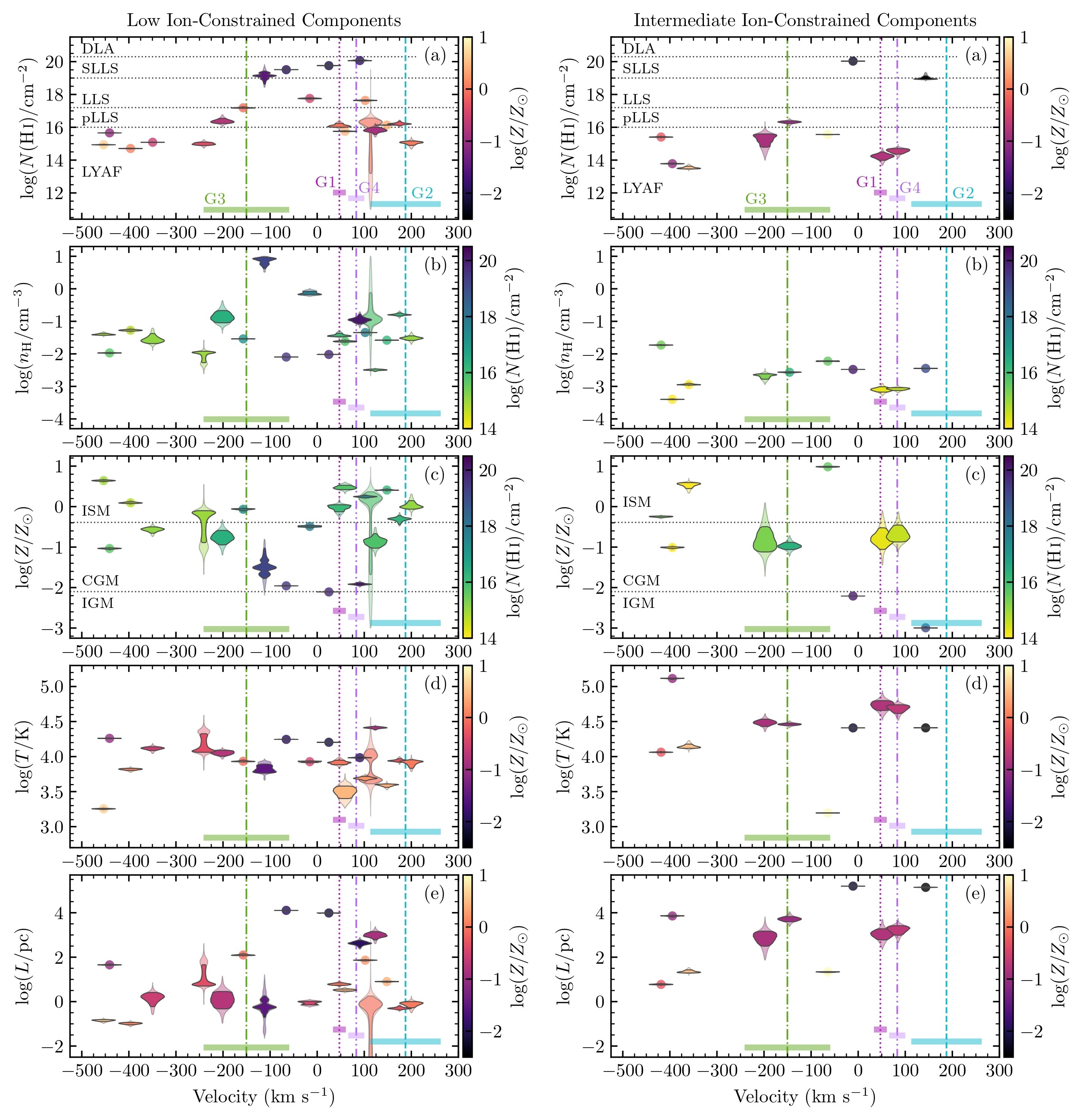
Nielsen et al. 2022 violin plots

Posterior distributions of H I column density, hydrogen number density, metallicity, temperature, and cloud thickness for each low-ion-constrained (left) and intermediate-ion-constrained (right) component as a function of velocity. Vertical lines mark the redshifts of compact group galaxies G1–G4.

Nielsen, Kacprzak, Sameer et al. 2022, MNRAS, 514, 6074

A Complex Multiphase DLA Associated with a Compact Group at z = 2.431 Traces Accretion, Outflows, and Tidal Streams

I performed all CMBM for this work, decomposing the kinematically complex absorption of a rare DLA with ultra-strong Mg II (Wr = 3.34 Å) associated with a compact group at z ≈ 2.431. The absorption required 30 clouds across low and intermediate ionisation phases — the most complex system CMBM had been applied to at the time. Cloud metallicities span nearly 4 dex, revealing metal-rich outflows, cold IGM accretion, and tidal stream material. The N(H I)-weighted mean metallicity of log Z/Z = −0.68 confirms that CMBM recovers average properties while revealing the full diversity of physical structures.

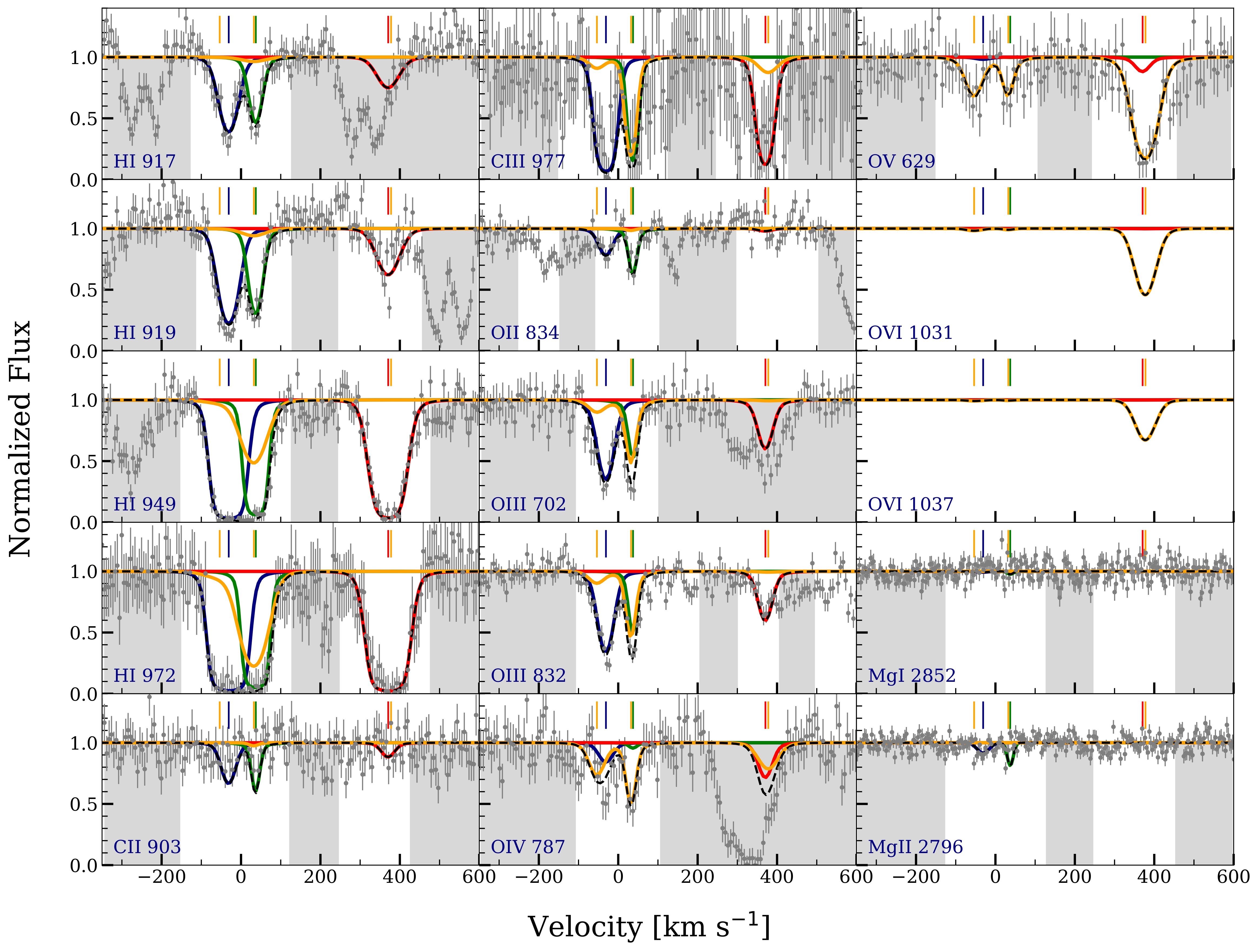
Narayanan et al. 2021 system plot

The synthetic profiles based on the maximum likelihood estimate values of the ionization models are shown overlaid on the data. The absorption due to the low ionization gas phases of components 1, 2, and 3 are depicted using blue, green, and red synthetic profiles respectively. The H I absorption is entirely coming from the low ionization phase in the three clouds. The O V in all three components requires a separate phase of higher ionization gas, indicated by the orange profiles, which also contributes partially to the O IV absorption. Expected O VI absorption is also synthesized and shown, though the available spectra do not cover this transition; in moderate S/N spectra, only the O VI associated with component 3 is likely to be a formal ≥3σ detection. The C II components are overproduced by the models, suggesting [C/O] < 0. Shaded regions are masked during the log-likelihood evaluation.

Narayanan, Sameer et al. 2021, MNRAS, 505, 738

A partial Lyman limit system tracing intragroup gas at z ≈ 0.8 towards HE 1003+0149

I performed the cloud-by-cloud Bayesian ionization modeling for this partial Lyman limit system at z = 0.83718, where H I and metal-line components are closely separated in redshift space (Δv ≈ 400 km s−1) toward the background quasar HE 1003+0149. The HST/COS far-UV spectrum covers oxygen ions from O I to O V, and comparison of the observed lines with synthetic profiles from the ionization modeling reveals two distinct gas phases: a low-ionization phase with sub-solar metallicities (~1/10 solar) showing indications of [C/O] < 0 in each of three components, and a more diffuse, higher-ionization phase traced by O IV and O V with H I column densities ~2 dex lower. VLT/MUSE observations of the quasar field reveal three dwarf galaxies (M* ∼ 108–109 M, SFR ≈ 0.5–1 M yr−1) at ρ/Rvir ≈ 1.8–3.0 from the absorber, with 21 further galaxies identified in a wider VLT/VIMOS and Magellan survey out to 5 Mpc and 1000 km s−1, 8 of which lie within 1 Mpc and 500 km s−1 — consistent with the sightline penetrating a small group of galaxies. The absorber traces multiple phases of cool (T ~ 104 K), photoionized intragroup medium, with the inferred [C/O] < 0 hinting at preferential enrichment by core-collapse supernovae in gas displaced from one or more nearby galaxies and confined to the group environment.

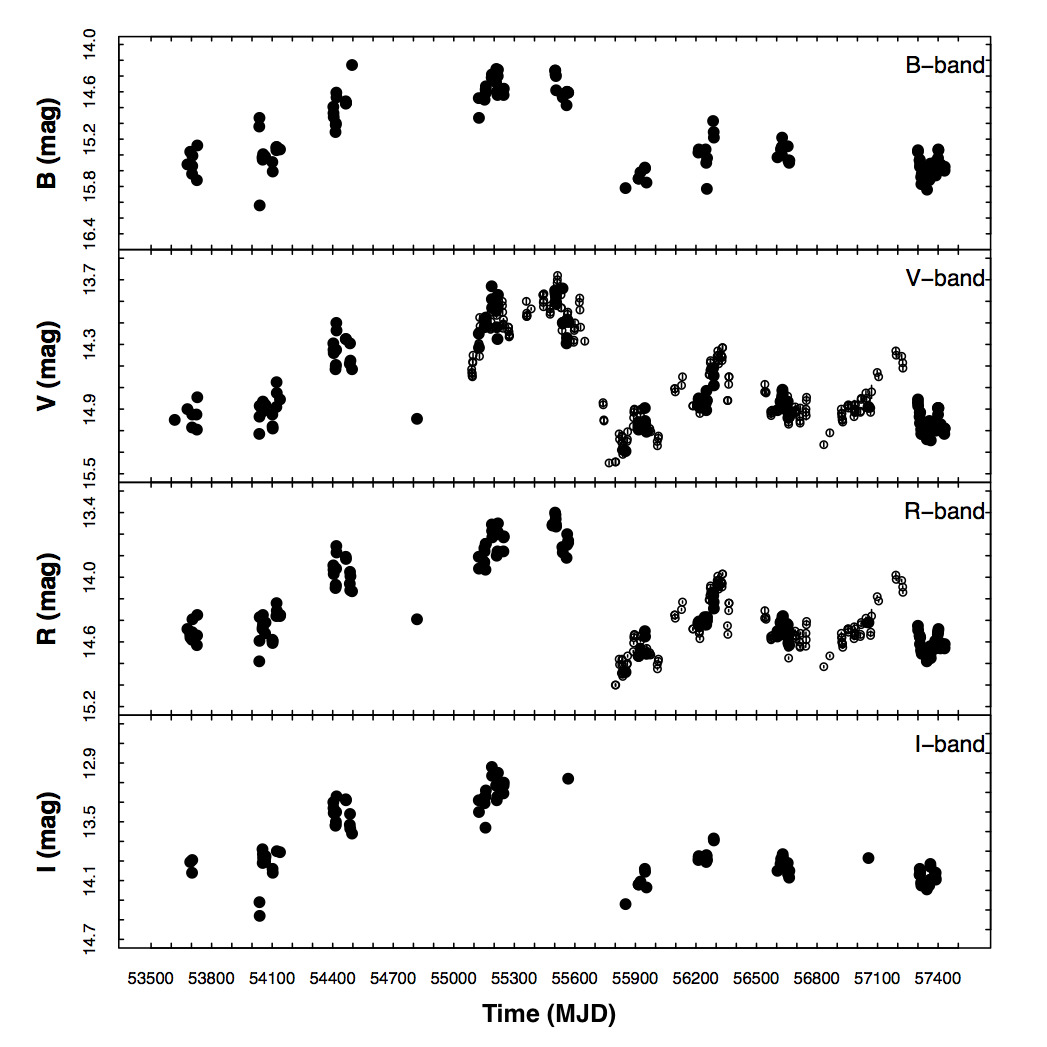
3C 66A long-term BVRI light curves

Multi-band (B, V, R, I) optical light curves for the blazar 3C 66A spanning the 2005–2016 monitoring campaign, showing both short- and long-term brightness variability. Archival Steward Observatory data in the R and V bands, used to fill gaps in the decade-long dataset, are shown as open circles.

Kaur, Sameer, Baliyan & Ganesh 2017, MNRAS, 469, 2305

Optical intra-day variability in 3C 66A: A decade of observations

As second author, I contributed to the decade-long photometric monitoring campaign and data reduction underlying this study. Using the 1.2-m telescope at Mt. Abu InfraRed Observatory, we monitored the blazar 3C 66A over 160 nights between 2005 and 2016, searching for intra-day variability (IDV) via differential photometry against comparison stars in the field. We find a modest IDV duty cycle of ~8%, with characteristic variability timescales of 37 minutes to 3.1 hours, implying an emission region no larger than ~7×1014 cm and an estimated SMBH mass of ~3.7×10⁸ M, assuming the variability originates close to the central engine. One night shows tentative evidence for quasi-periodic variations on a ~1.4 hour timescale, potentially tracing a helical jet or light-house geometry. On longer timescales, the source exhibits brightness swings of up to 1.7 mag over ~1650 days, along with a mild bluer-when-brighter color trend typical of BL Lac objects — both consistent with synchrotron emission from a turbulent, shocked relativistic jet.

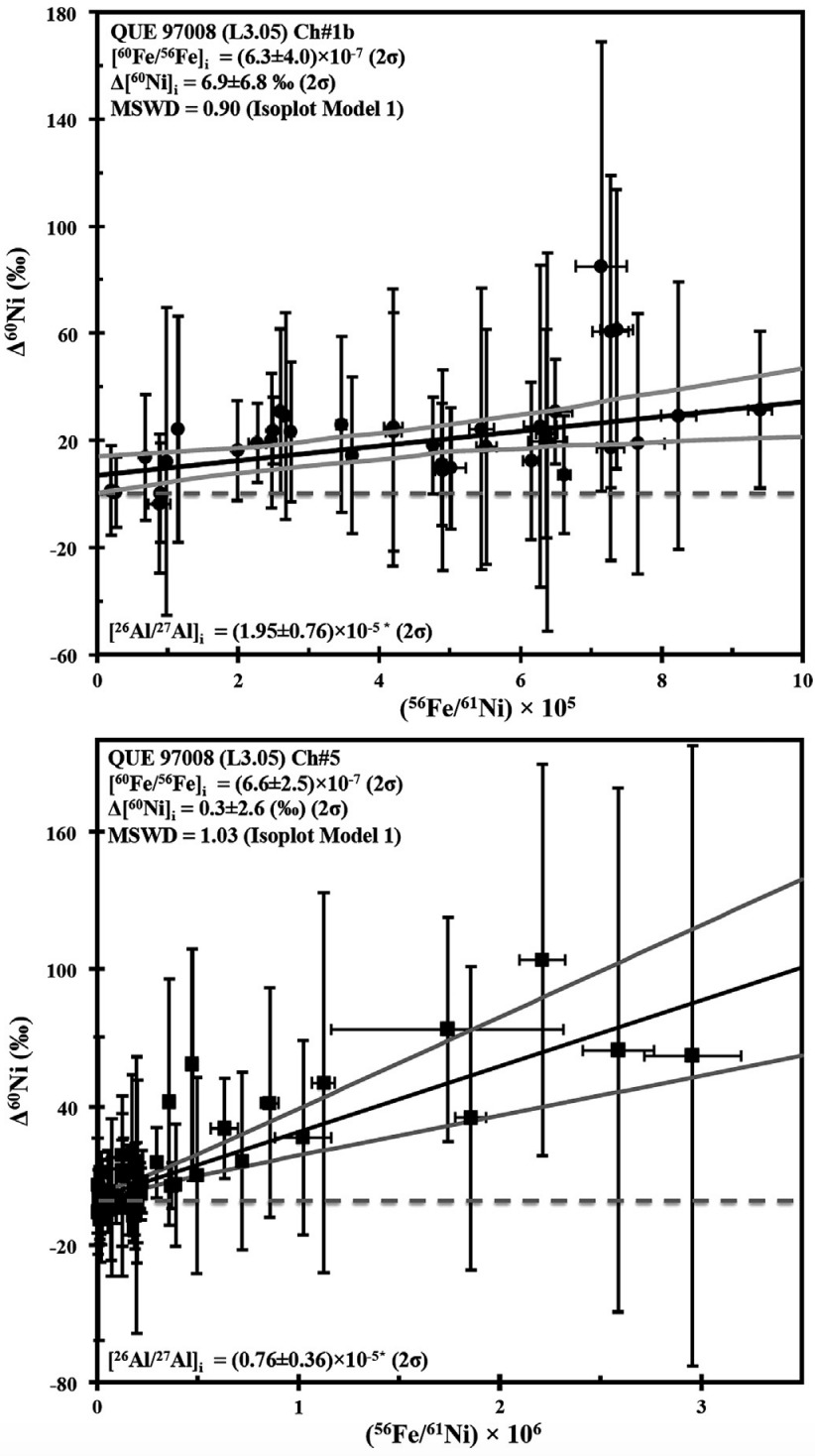
QUE 97008 Fe-Ni isochrons

Fe–Ni isochrons for the QUE 97008 chondrules Ch1b and Ch5, derived from NanoSIMS measurements of mass-fractionation-corrected ⁶⁰Ni excesses correlating with the Fe/Ni ratio. Error bars are 2σ; the fitted slopes yield initial ⁶⁰Fe/⁵⁶Fe ratios of (6.3±4.0)×10−7 and (6.6±2.5)×10−7 for Ch1b and Ch5, respectively. The ²⁶Al/²⁷Al ratios previously measured for the same chondrules are noted in the lower left of each panel.

Mishra, Marhas & Sameer 2016, EPSL, 436, 71

Abundance of ⁶⁰Fe inferred from nanoSIMS study of QUE 97008 (L3.05) chondrules

This paper, from earlier in my career as a mass spectrometrist at the Physical Research Laboratory, presents NanoSIMS measurements of ⁶⁰Fe–⁶⁰Ni isotope systematics in two chondrules from the QUE 97008 ordinary chondrite, extending the limited set of meteorites with resolved in-situ ⁶⁰Fe records beyond the well-studied Semarkona meteorite. Both chondrules show mass-fractionation-corrected excesses in ⁶⁰Ni that correlate with Fe/Ni ratio, yielding initial ⁶⁰Fe/⁵⁶Fe ratios of (6.3±4.0)×10−7 and (6.6±2.5)×10−7 — values consistent with prior in-situ SIMS studies but in tension with the lower abundances reported by bulk and mineral-separate MC-ICPMS measurements of other meteorites. The results extend the correlation between ⁶⁰Fe/⁵⁶Fe and independently measured ²⁶Al/²⁷Al ratios, broadly consistent with the expected co-decay trend for a canonical early Solar System ⁶⁰Fe abundance, while highlighting an unresolved discrepancy between SIMS- and mass-spectrometry-based cosmochemistry techniques that remains an open question in meteoritics.

Co-authored

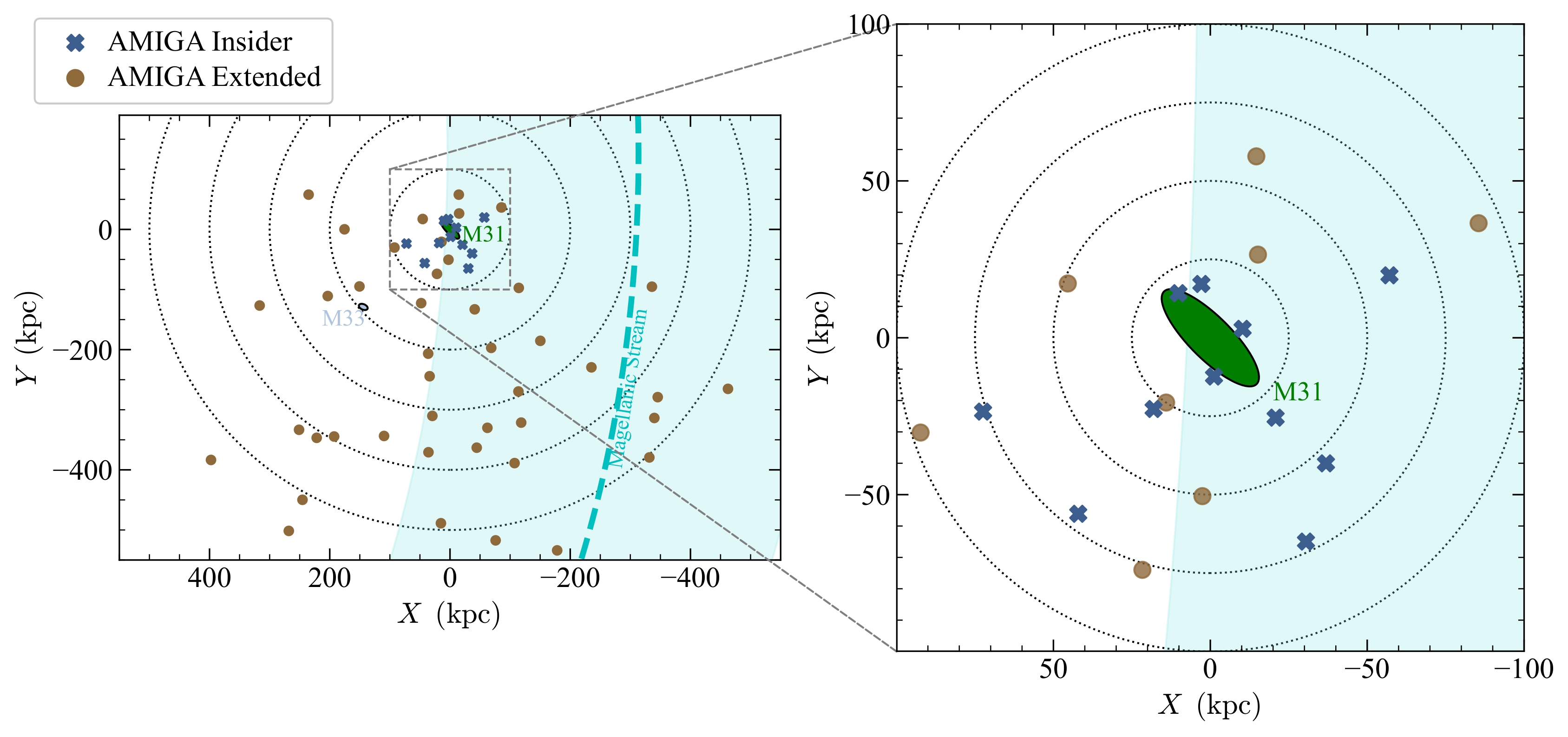
Project AMIGA sightline map

Locations of all 54 Project AMIGA QSO sightlines relative to the M31–M33 system. Blue crosses mark the 11 new AMIGA Insider sightlines; brown circles show the original 43 AMIGA Extended sightlines.

Lehner, Sameer et al. 2026, ApJ, 997, 183

Project AMIGA: The Inner Circumgalactic Medium of Andromeda from Thick Disk to Halo and its Metal Budget

As a core member of Project AMIGA, I performed a careful assessment of the inner sightlines to identify line blends, conducted Na V analysis, and carried out Voigt profile fitting to compare Na V column densities with model-derived values. This paper presents the first comprehensive UV absorption characterization of M31's inner CGM within 75 kpc. A clear disk–CGM transition is identified at R ≲ 30 kpc. No azimuthal dependence is found. The cool CGM metal mass within 1.3 Rvir is (2.56 ± 0.43stat ± 0.83sys) × 107 M, with the O VI warm phase containing ~10× more metal mass.

Watch summary video

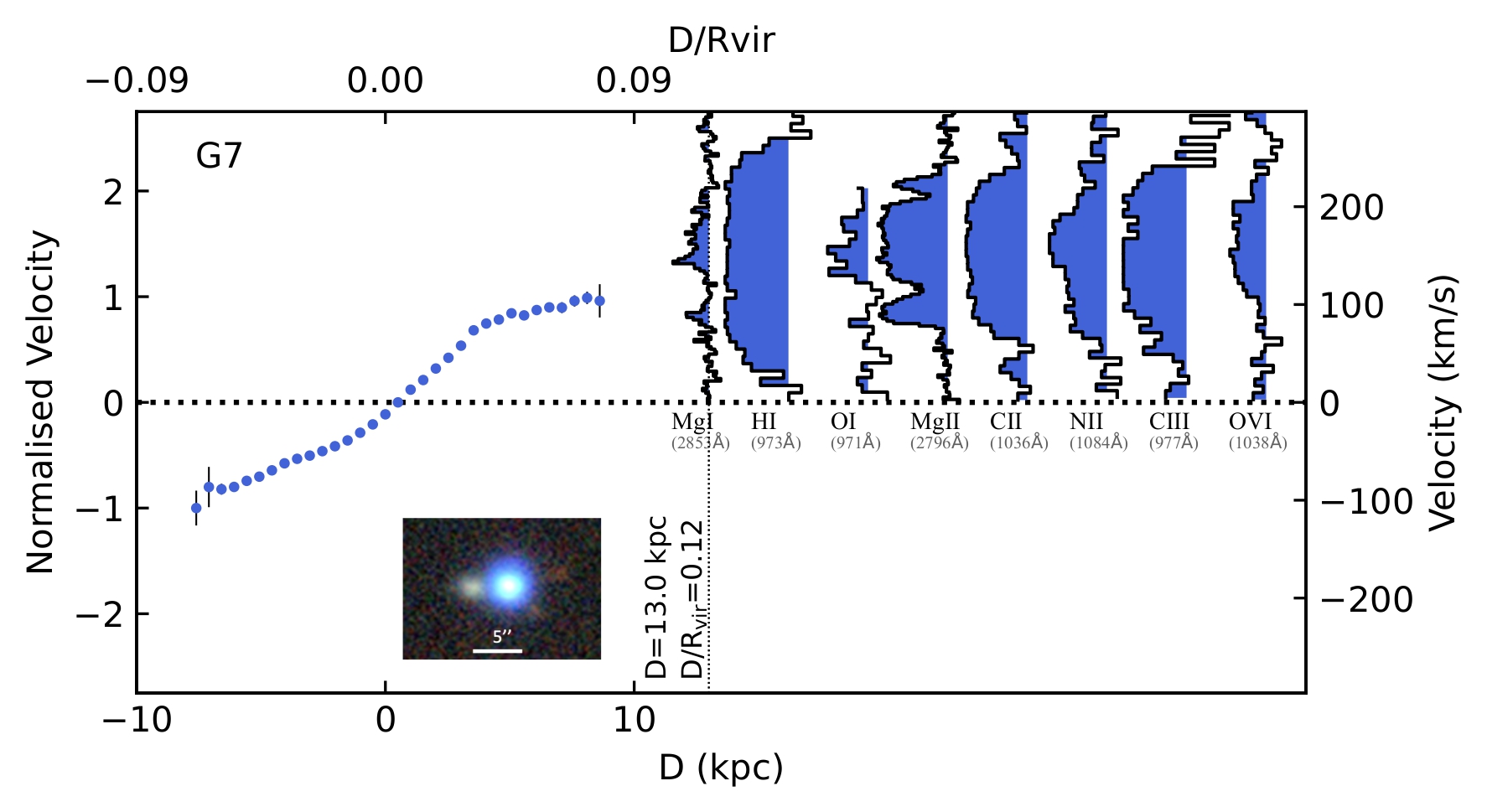
COS-EDGES G7 kinematic comparison

Kinematic comparison between galaxy G7's rotation curve and its multi-phase circumgalactic absorption, with the quasar field image shown as an inset. Blue circles trace the galaxy's rotation curve, with rotation toward the quasar in the upper right. Absorption profiles for ions of increasing ionization potential are shown at the projected distance of the quasar, offset for clarity. The multi-phase CGM aligns closely with the galaxy's rotation direction.

Kacprzak, Oppenheimer, Nielsen, Fernández-Figueroa, Murphy, Allen, Barone, Sameer et al. 2025, PASA, 42, e128

COS-EDGES: Co-rotation and Kinematic Stratification of the Multi-Phase CGM Around Edge-On Galaxies

I developed the cloud-by-cloud multiphase Bayesian ionization modeling (CMBM) framework (Sameer et al. 2021, 2024) that underpins this survey's approach to CGM structure, and I am advising the student leading the effort to model these systems cloud by cloud. This paper introduces the COS-EDGES survey, targeting nine isolated, near-edge-on galaxies at z ∼ 0.2 probed along their major axis by background quasars at D = 13–38 kpc, to trace how gas flows connect the ISM to the CGM. Comparing HST/COS and VLT/UVES absorption (Mg I, Mg II, H I, C II, C III, and O VI) to galaxy rotation curves from Keck/LRIS and Magellan/MagE, the survey finds that within D/Rvir ≲ 0.2, essentially all ions — including O VI — closely track the galaxy's rotation speed, while beyond this radius the kinematic coupling weakens sharply, especially for O VI, whose optical-depth-weighted velocity drops to only ~20% of the galaxy's rotation speed. This radial transition closely matches theoretical predictions for a cooling-flow radius near 0.1–0.2 Rvir, inside which cold, high-angular-momentum inflow dominates, and beyond which a hotter, more pressure-supported CGM phase takes over — providing some of the cleanest observational evidence yet for a radially stratified, multi-phase circumgalactic medium.

Richter et al. 2025 group sightline configuration

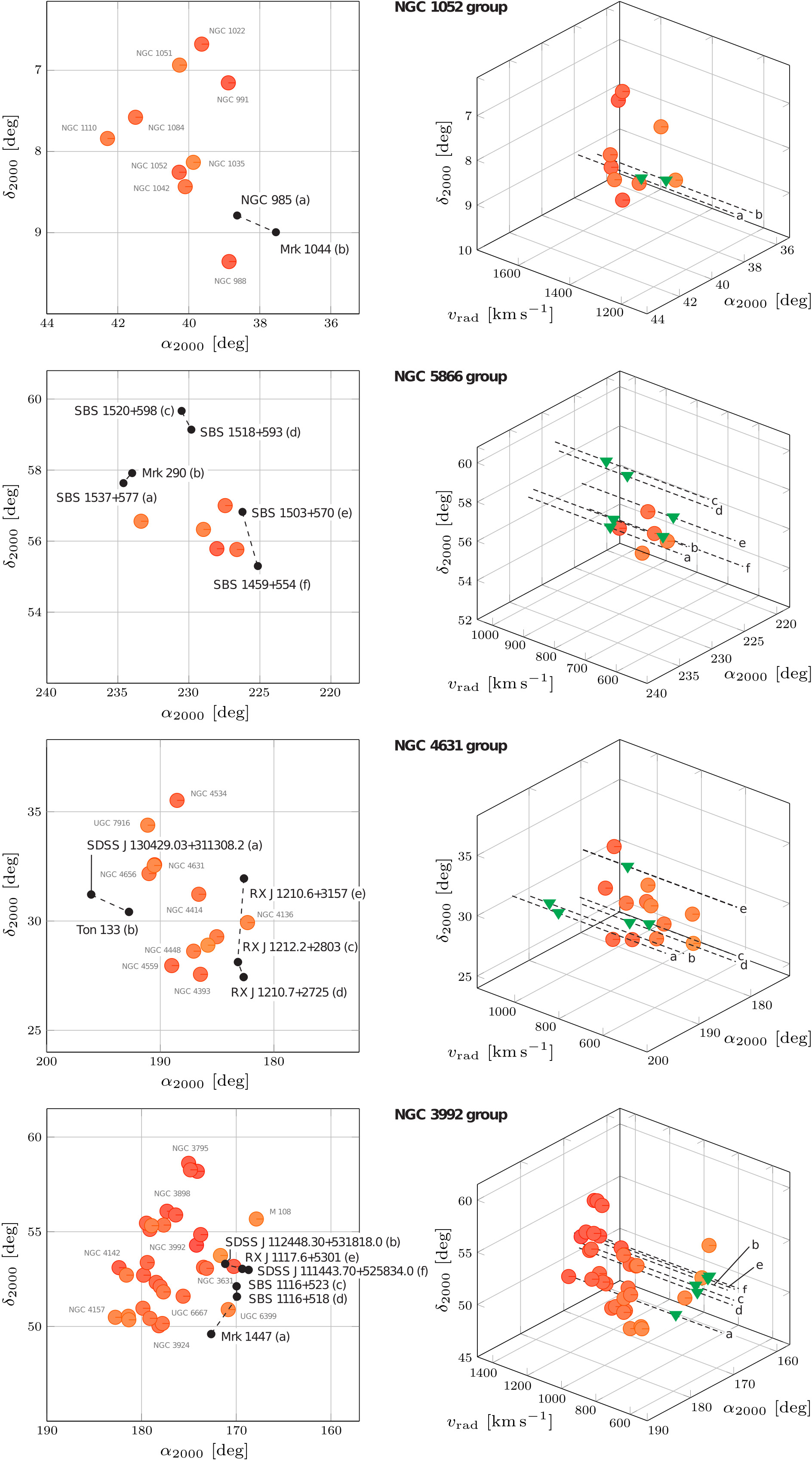
Spatial configuration of group member galaxies and AGN sightlines for the four groups. Left panels show projected positions; right panels show group members and OGrM systems in 3D position–velocity space.

Richter et al. 2025, A&A, 701, A75

Studying the gaseous outskirts of galaxy groups with coherent Ly α absorption patterns

A systematic search for H I Ly α absorption in the outer group medium (OGrM) using archival HST/COS spectra of 35 AGN sightlines at ρ/Rvir = 1–3 around four nearby low-mass groups. Coherent Ly α absorption is detected along 19 of 35 sightlines, yielding dN/dz = 232 ± 58 for log N(H I) ≥ 13.2 — ~25 percent above the z = 0 filament value and more than twice the Ly α forest rate. A hydrostatic toy model constrains gas densities to log nH = −5.00 to −3.72, consistent with predominantly photoionized gas. The high OGrM absorber overdensity points to a substantial baryon reservoir on group outskirts, possibly sustained by AGN feedback.

Gas Flows II slope histogram

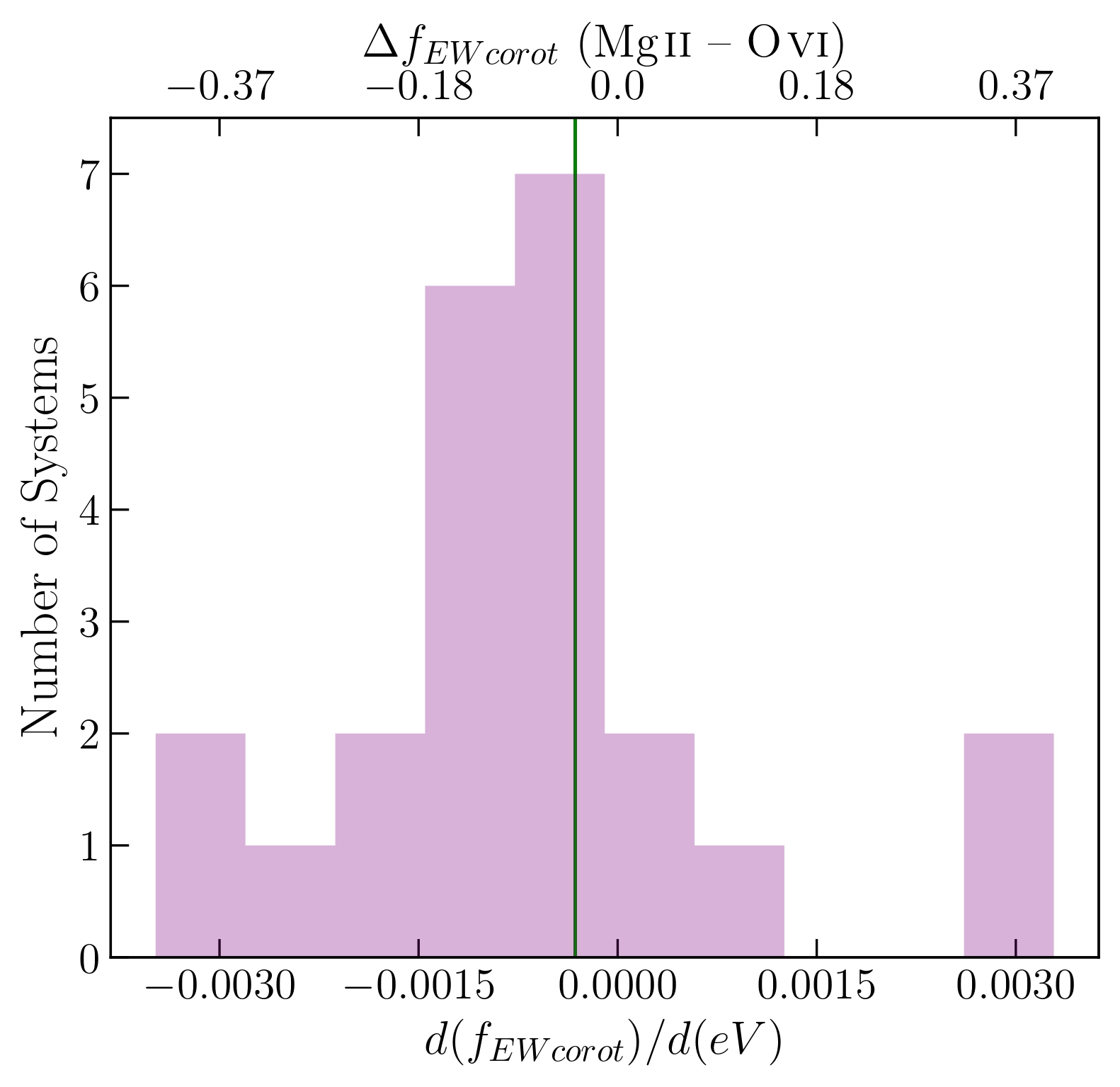
Distribution of the change in co-rotation fraction as a function of ionization potential for 23 galaxy–CGM pairs.

Nateghi et al. 2024, MNRAS, 534, 930

Signatures of Gas Flows–II: Connecting the kinematics of the multiphase CGM to galaxy rotation

The absorption profile fitting and physical modeling draw on CMBM results from Sameer et al. 2024. Examining 27 galaxy–CGM pairs with multiphase metal absorption, this work finds that the slope of co-rotation fraction vs. ionization potential is negative on average — low-ionization gas is more kinematically coupled to galaxy rotation. Along the major axis, lower-ionization gas with higher co-rotation fractions shows lower CGM metallicity (consistent with cosmic filament accretion), while higher-ionization gas shows higher metallicity, possibly tracing recycled material cooling onto the disk.

Gas Flows I polar plot

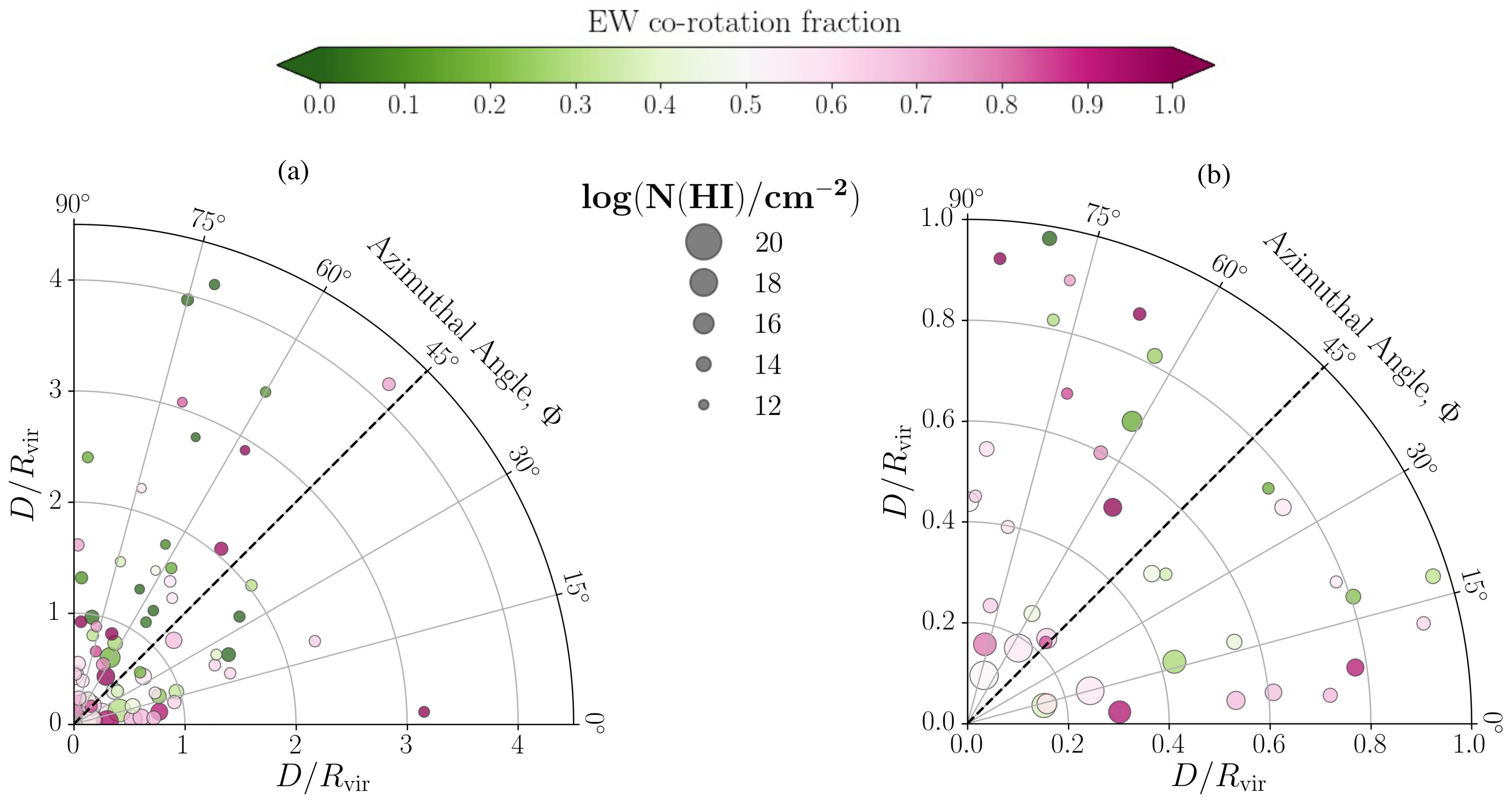
H I co-rotation fraction as a function of virial-radius normalized impact parameter and azimuthal angle for 70 galaxy–QSO pairs.

Nateghi et al. 2024, MNRAS, 533, 1321

Signatures of Gas Flows–I: Connecting the kinematics of the H I CGM to galaxy rotation

The H I column densities used throughout this kinematic study are adopted from Sameer et al. 2024 (MNRAS), derived via CMBM. Using 70 quasar sightlines with HST/COS H I absorption within 5Rvir of z < 0.6 galaxies, this work introduces the equivalent width co-rotation fraction (fEWcorot). The co-rotation fraction increases with H I column density, is flat at ~0.6 within Rvir, and decreases to ~0.35 beyond. Significant co-rotation is found along the minor axis within Rvir, suggesting outflowing gas remains bound to galaxy halos.

Fernandez-Figueroa et al. 2024 violin plot

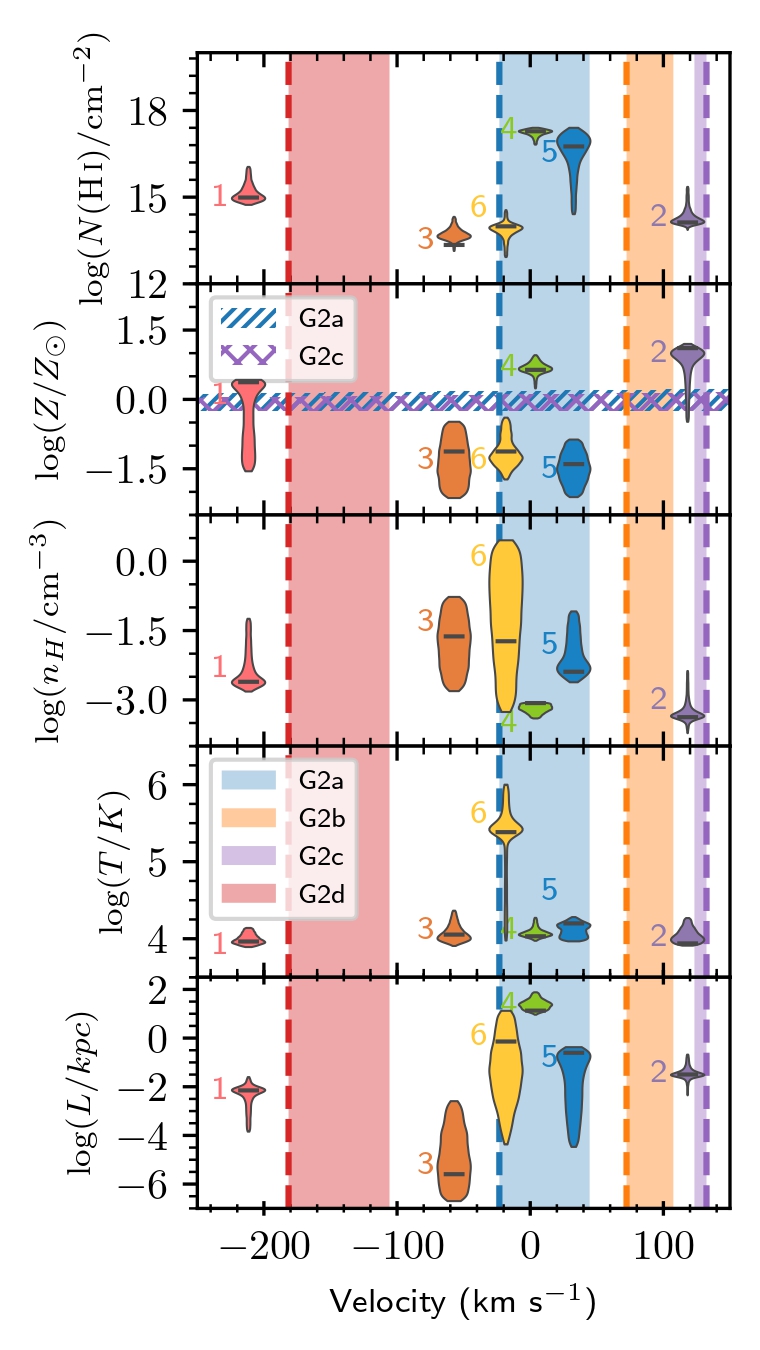
Properties of the CGM absorption associated with the merging system (G2). Violin plots show the posterior distributions of, from top to bottom, H I column density, metallicity, hydrogen number density, temperature, and cloud thickness as a function of velocity, with darker and lighter shading indicating the 1σ and 3σ ranges. Vertical dashed lines mark the systemic velocity of each galaxy; shaded regions show the velocity range an extended rotating disk would have at the quasar location for G2a (blue), G2b (orange), G2c (purple), and G2d (red).

Fernández-Figueroa et al. 2024, MNRAS, 531, 3658

Unveiling the complex circumgalactic medium: a comparative study of merging and non-interacting galaxy groups

The CMBM framework from Sameer et al. 2021 was applied here to characterize cloud-by-cloud physical conditions of the CGM in two galaxy groups along the same quasar sightline: a non-interacting pair (G1, z = 0.043, D ≈ 48 kpc) and a merging quartet (G2, z = 0.098, D ≈ 100 kpc). Despite being twice as far from the quasar, G2 has a substantially higher H I column density and six absorption components spanning Δv ≈ 400 km s−1. The merging system's CGM spans nearly 1.6 dex in metallicity, is in a higher ionization state, and cannot be explained by a simple superposition model. Mergers substantially amplify CGM complexity.

Marra et al. 2021 line-of-sight gas cell properties

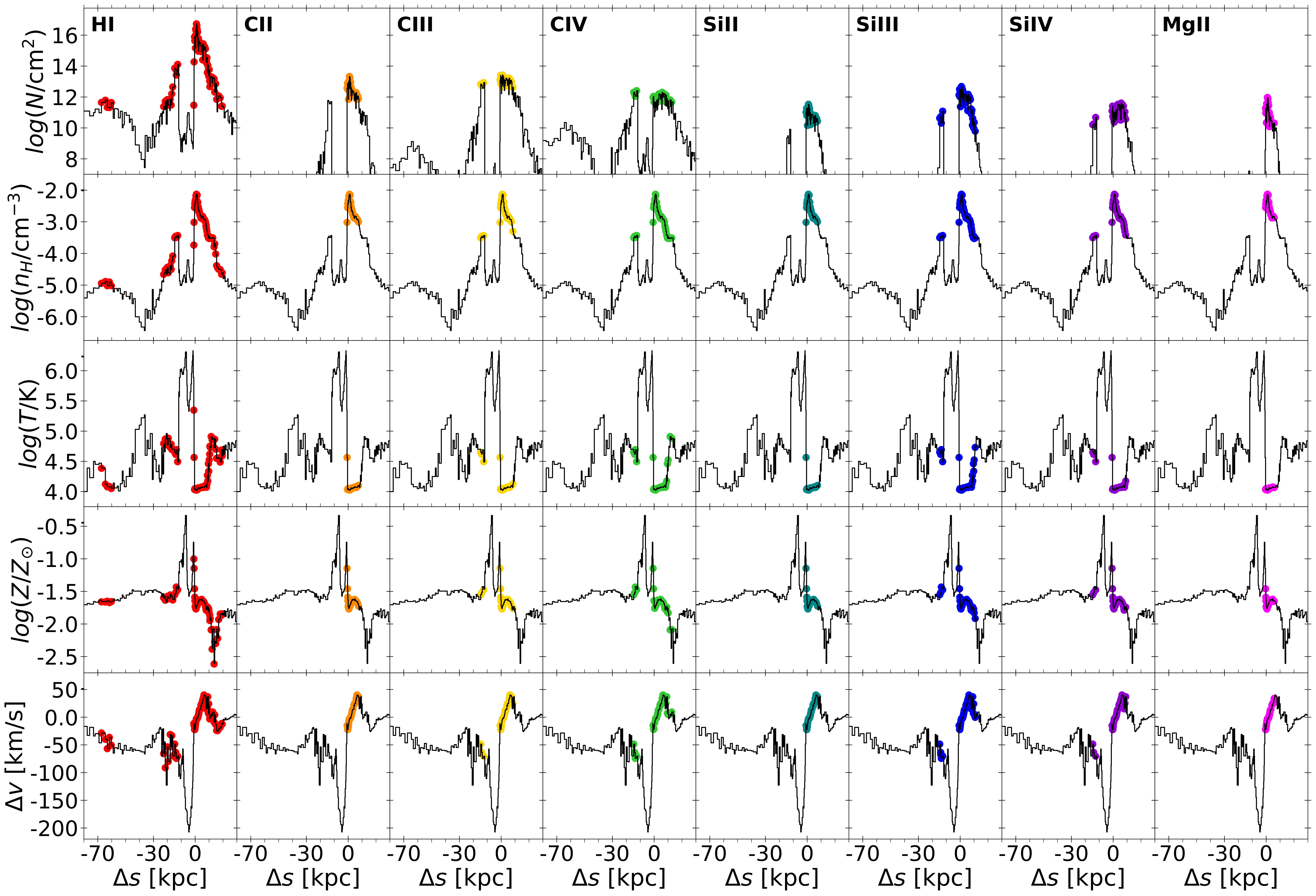
Physical conditions of the gas cells intercepted by LOS0034 for the z = 0 Dwarf galaxy as a function of line-of-sight position, with columns showing H I, C II, C III, C IV, Si II, Si III, Si IV, and Mg II, and rows showing column density, hydrogen number density, temperature, metallicity, and line-of-sight velocity. Column densities are computed from the ionization fraction, elemental density, and actual path length through each cell. Colored dots mark absorbing cells selected from the synthetic spectra.

Marra et al. 2021, MNRAS, 508, 4938

Using cosmological simulations and synthetic absorption spectra to assess the accuracy of observationally derived CGM metallicities

This paper is a blind pilot study testing whether standard single-phase ionization modeling recovers the true properties of circumgalactic gas, using synthetic COS and HIRES absorption spectra generated from adaptive-mesh-refinement cosmological simulations of a z = 1 Milky Way–type galaxy and a z = 0 Dwarf galaxy. Without prior knowledge of the simulated gas properties, the team applied Voigt profile fitting combined with MCMC/Cloudy single-phase modeling to five sightlines per galaxy, then compared the recovered metallicities and hydrogen densities against the true geometric-mean properties of the absorbing gas cells. The study finds that single-phase modeling recovers the intrinsic metallicity to within 0.2 dex on average for both galaxies, while hydrogen density estimates are offset by 0.3–0.4 dex. My earlier development of cloud-by-cloud, multiphase Bayesian ionization modeling (Sameer et al. 2021) is used throughout the paper as the benchmark for interpreting these results: the authors note that single-phase modeling of a complex, multiphase absorber effectively recovers the average metallicity of the underlying gas distribution — directly corroborating the comparison between single- and multiphase modeling in Sameer et al. 2021 — and they point to multiphase modeling of this kind as the natural next step for capturing the metallicity bimodality seen along several of their sightlines.

CIE and non-CIE model predictions for CIV/OVI

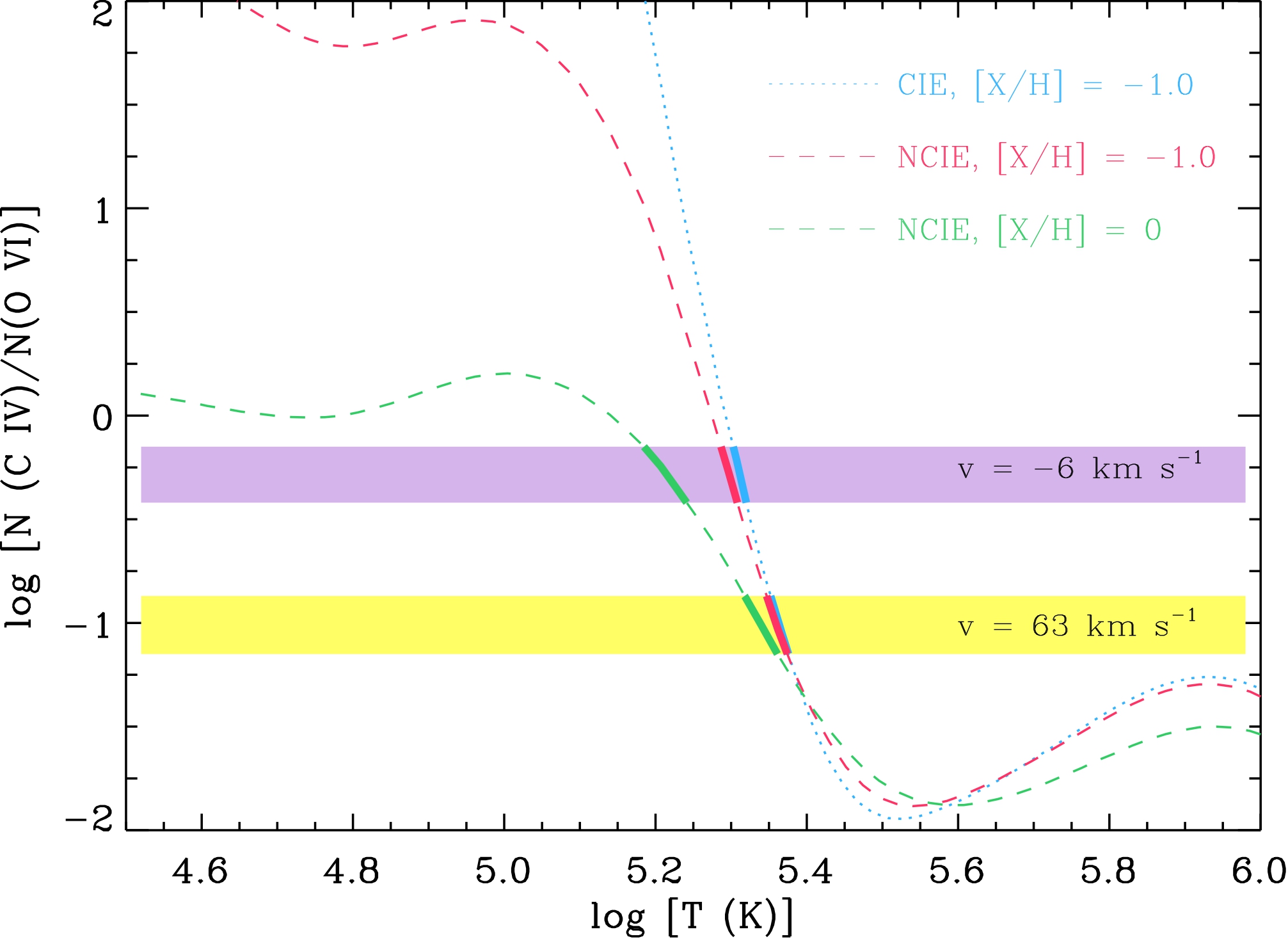
CIE (dotted) and non-CIE (dashed) model predictions for the C IV to O VI column density ratio as a function of gas temperature, based on the models of Gnat & Sternberg (2007). Non-CIE predictions are shown for solar and one-tenth solar metallicity. The thick segment of each curve marks the 1σ range of the observed column density ratio, with the observed ratios for the central (v = −6 km/s) and offset (v = +63 km/s) clouds indicated by the horizontal shaded regions.

Pradeep, Sankar, Umasree, Narayanan, Khaire, Gebhardt, Sameer & Charlton 2020, MNRAS, 493, 250

Solar-metallicity gas in the extended halo of a galaxy at z ∼ 0.12

This paper presents the detection and detailed ionization modeling of a weak, multiphase circumgalactic absorber at z = 0.12122 along the blazar sightline PG 1424+240, combining HST/COS and STIS spectroscopy. The absorber is a weak Mg II analog, showing narrow, high-metallicity (solar or higher) C II and Si II absorption tracing a dense (nH ~ 10−3 cm−3), parsec-scale cloud, alongside kinematically offset, multi-component C IV and O VI absorption. Photoionization and collisional ionization models show the high-ionization gas can arise either from a diffuse (nH ~ 10−5–10−4 cm−3), kiloparsec-scale photoionized phase or a warm (T ~ 2×10⁵ K) collisionally ionized transition-temperature layer. A search of SDSS spectroscopy reveals 18 luminous (>L*) galaxies within 5 Mpc and 750 km/s of the absorber, with a 1.4L* galaxy at only 200 kpc and 11 km/s separation — evidence favoring a circumgalactic origin for this weak Mg II–O VI system, and establishing it as a useful example for studying multiphase high-velocity clouds in external galaxies.

WLQ to BAL quasar transformation spectra

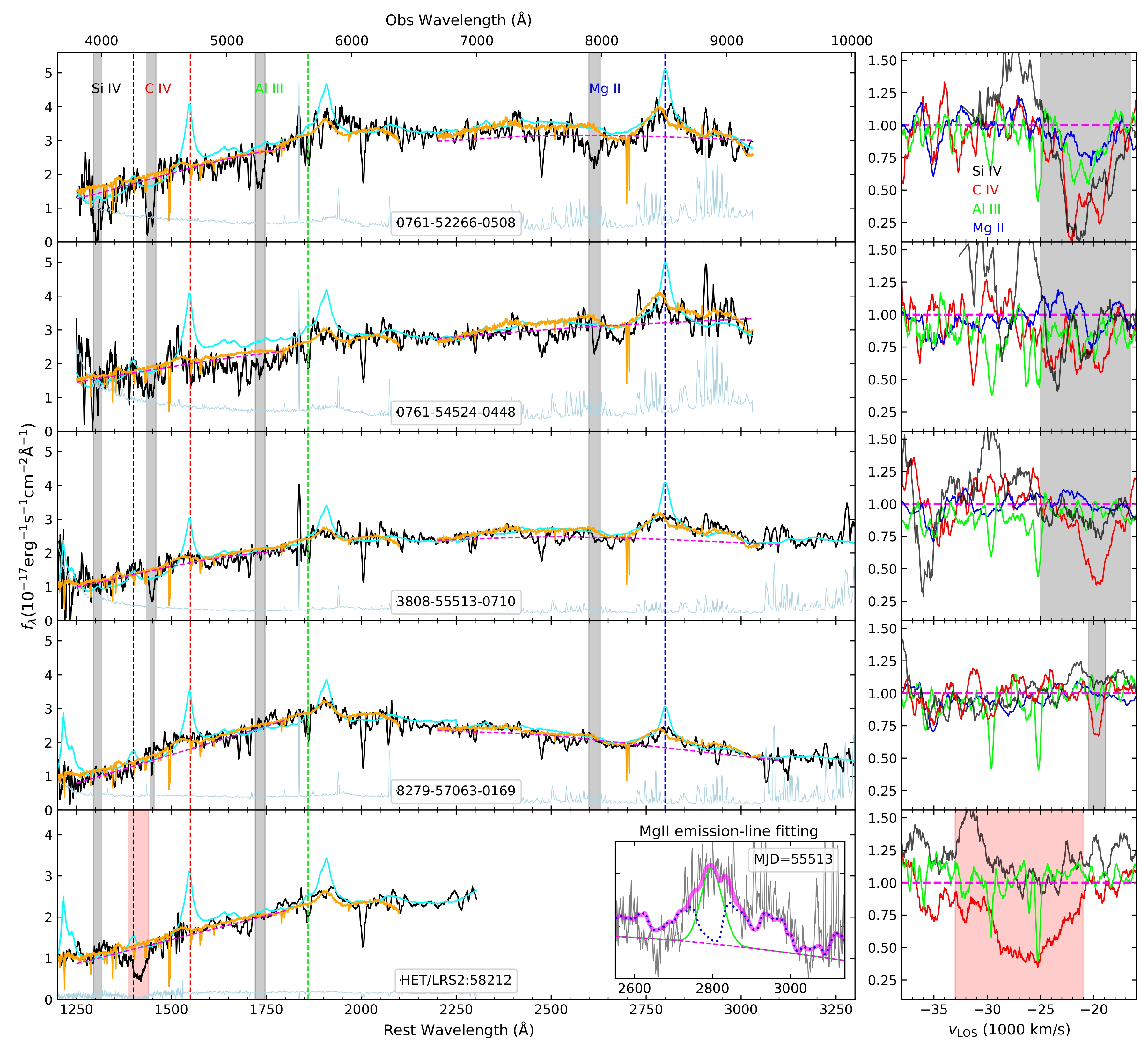
Multi-epoch optical spectra (left panels) with continuum fits compared against quasar composite and weak-line quasar templates. Gray shaded regions mark four ionic BAL troughs; the red shaded region highlights the newly emerged C IV BAL. Right panels show normalized absorption profiles for each ion in velocity space, with C IV BAL emergence occurring simultaneously with changes in the other ionic troughs. Inset: fit to the Mg II broad emission line.

Yi et al. 2019, ApJL, 870, L25

Broad Absorption Line Disappearance/Emergence in Multiple Ions in a Weak Emission-line Quasar

This paper reports the discovery of a quasar that transformed from a weak-emission-line quasar (WLQ) — a rare class showing anomalously weak broad emission lines — into a broad absorption line (BAL) quasar, with a strong C IV BAL emerging over the multi-epoch spectroscopic monitoring baseline. Simultaneous with the C IV BAL emergence, the source shows a strengthening of Si IV, Al III, and Mg II absorption, along with a corresponding change in the continuum and Mg II broad emission line strength, consistent with a rapid increase in the covering fraction of outflowing gas along the line of sight. This transformation — the mirror image of the BAL-to-non-BAL transitions I studied in Sameer et al. 2019 — provides a rare direct look at the onset of a BAL outflow, and adds to a growing body of evidence that some BAL troughs form and dissipate on observable human timescales as a result of changes in the ionization state or covering factor of outflowing gas rather than transverse motion across the line of sight.

OJ 287 binary black hole illustration

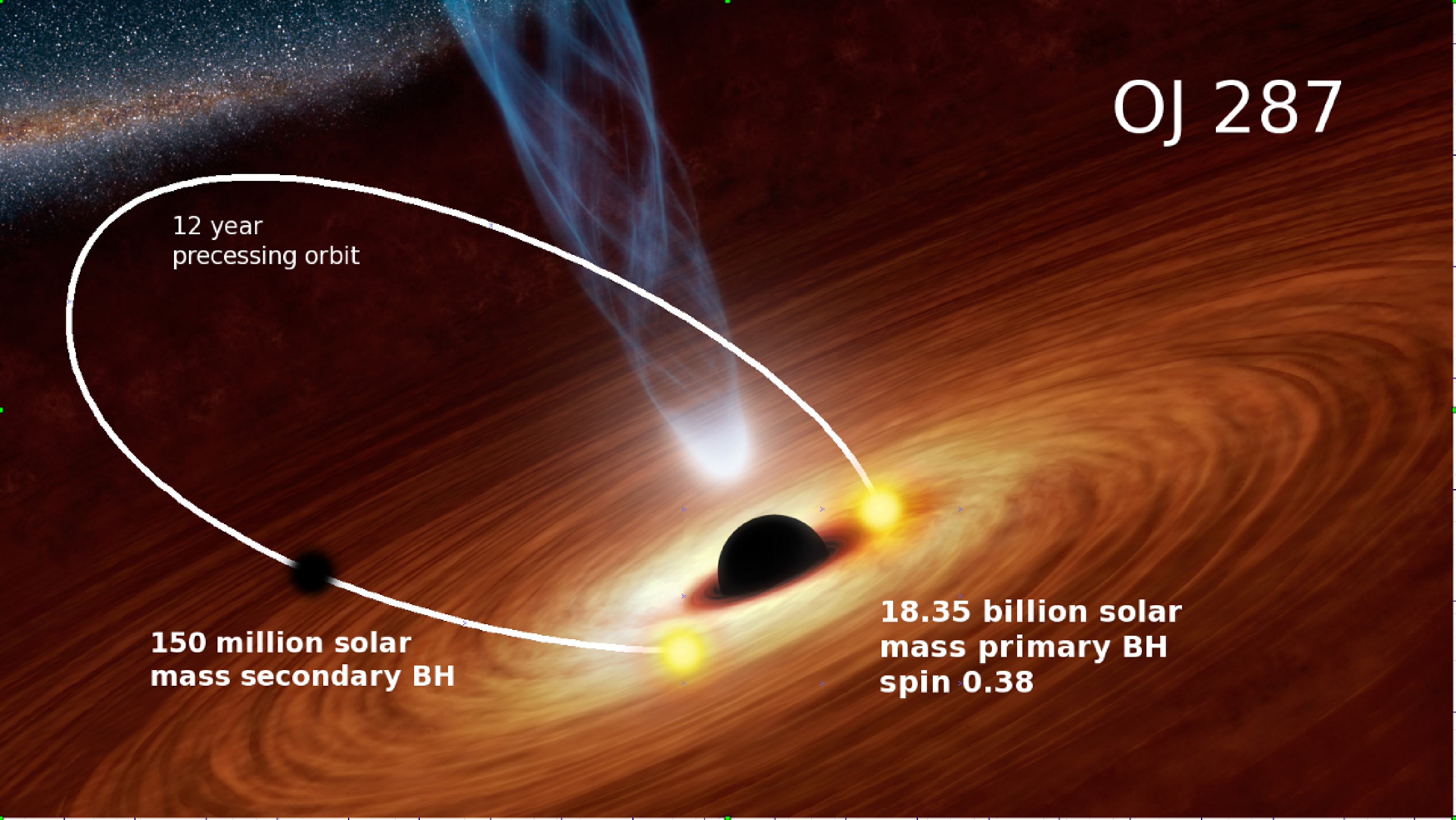
Artist's impression of the binary black hole system in OJ 287. This work provides an improved estimate of the primary black hole's spin.

Dey et al. 2018, ApJ, 866, 11

Authenticating the Presence of a Relativistic Massive Black Hole Binary in OJ 287 Using Its General Relativity Centenary Flare: Improved Orbital Parameters

I collected photometric data on OJ 287 using the 50-cm and 1.2-m telescopes at the Mount Abu InfraRed Observatory in October 2015, and carried out the data reduction and analysis to measure magnitudes in the R, V, and I bands. These observations were part of the crucial early monitoring period ahead of the predicted impact flare, which ultimately peaked at magnitude 12.9 in the R-band on 2015 December 5 — timing that enabled the team to determine the spin parameter of the primary black hole with exceptional precision. This paper presents a refined general-relativistic model of the OJ 287 binary supermassive black hole system, using the timing of the source's characteristic double-peaked optical outbursts — produced when the secondary black hole punches through the primary's accretion disk twice per orbit — to constrain the system's orbital dynamics to high precision. Incorporating updated photometric data, including successful real-time prediction and observation of the July 2019 impact flare, the model yields a refined spin estimate for the primary black hole and improved constraints on the component masses, providing one of the most stringent tests to date of higher-order post-Newtonian orbital dynamics in a strong-field binary black hole system.

OJ 287 long-term optical light curve

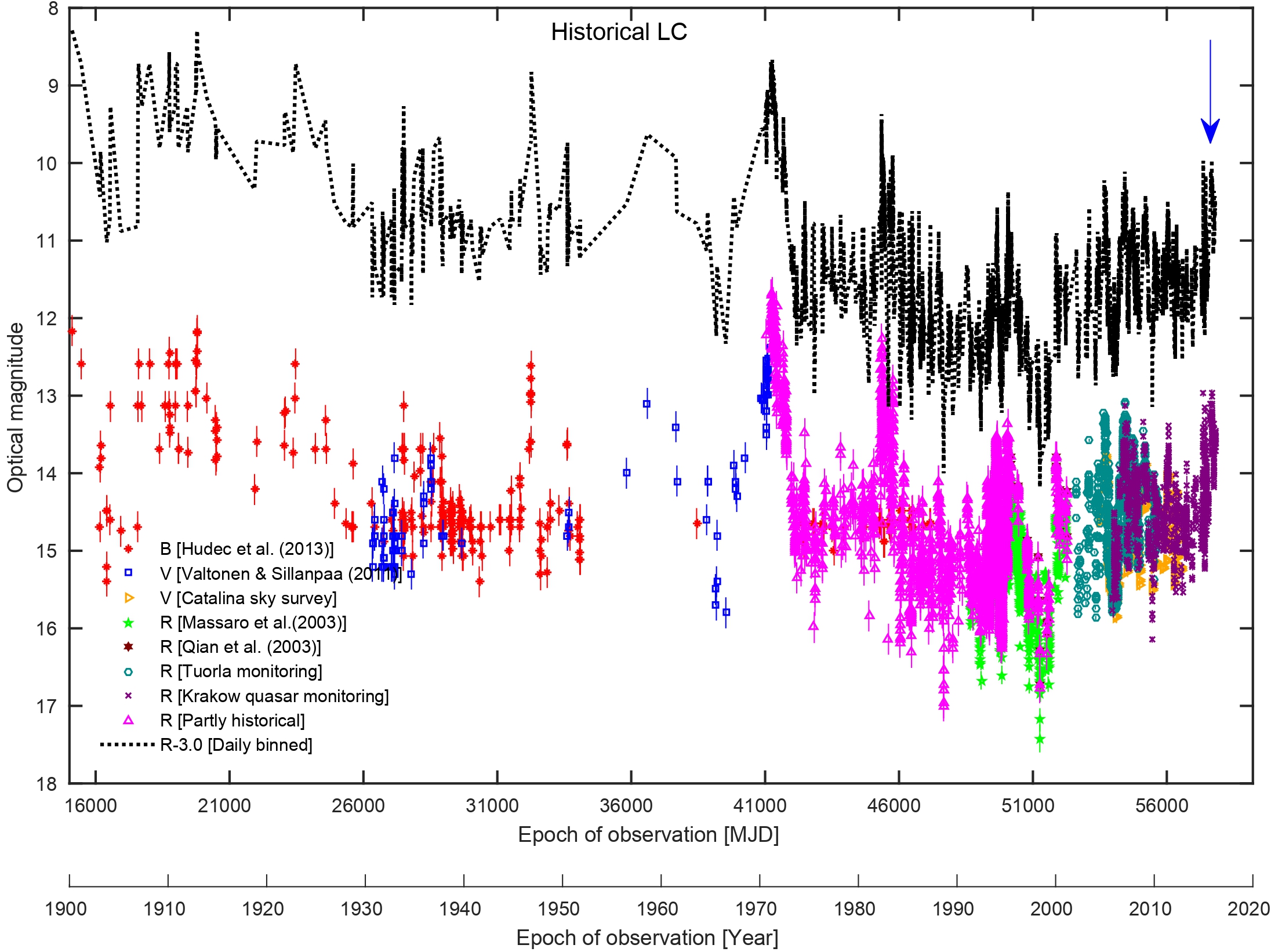
Long-term optical light curve of OJ 287, combining historical photometry with newly acquired measurements. Different symbols denote data in different filters. The blue arrow marks the peak of the 2015 December 4 giant outburst; the black dotted line (shifted upward by 3 mag for clarity) traces the corresponding R-band flux evolution assuming fixed color differences.

Goyal et al. 2018, ApJ, 863, 175

Stochastic Modeling of Multiwavelength Variability of the Classical BL Lac Object OJ 287 on Timescales Ranging from Decades to Hours

I collected photometric data on OJ 287 using the 50-cm and 1.2-m telescopes at the Mount Abu InfraRed Observatory, contributing to the long-term optical light curve presented in this study. This paper applies stochastic continuous-time autoregressive moving-average (CARMA) modeling to decades of multiwavelength monitoring of OJ 287, spanning radio through gamma-ray observations and combining archival data with an extensive new ground-based optical campaign, to characterize the source's characteristic variability timescales across the electromagnetic spectrum. The analysis reveals distinct characteristic timescales in different bands, providing constraints on the sizes and locations of the various emission regions along the jet, and tests whether any of the observed variability supports quasi-periodic signatures tied to the binary supermassive black hole model that has been proposed to explain OJ 287's recurring outbursts.

S5 0716+714 intra-night light curves

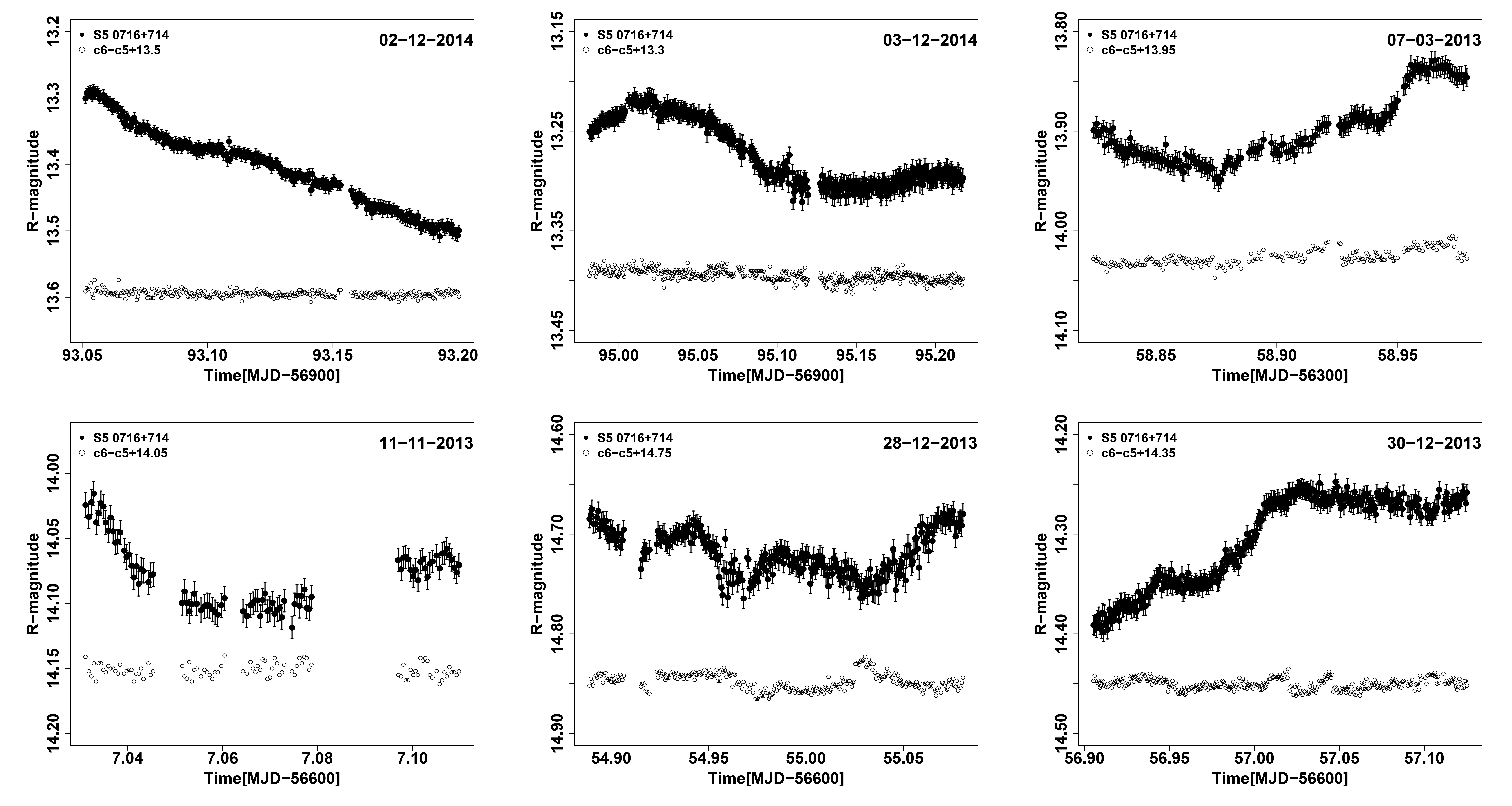
Intra-night optical light curves for the blazar S5 0716+714 across nine nights between January 2013 and June 2015. Upper curves show calibrated source brightness in the R band; lower curves show the differential light curve between the two comparison stars, indicating measurement uncertainty.

Kaur, Baliyan, Chandra, Sameer & Ganesh 2018, AJ, 156, 36

Optical Variability in IBL S5 0716+714 during the 2013–2015 Outbursts

I contributed photometric monitoring data as part of this campaign, extending the intra-day variability methodology from our earlier study of 3C 66A (Kaur, Sameer et al. 2017) to the blazar S5 0716+714. Using the 1.2-m telescope at the Mount Abu InfraRed Observatory, we monitored the source over 46 nights between 2013 January and 2015 June, spanning two major optical outbursts, obtaining 6256 R-band data points for intra-night variability along with B, V, and I-band photometry to track color and long-term behavior. The source showed significant intra-night variability with a duty cycle exceeding 31%, reaching an unprecedented historical brightness of R = 11.68 mag on 2015 January 18. A mild bluer-when-brighter trend, typical of BL Lac objects, supports a shock-in-jet origin for the variability, with larger variability amplitudes when the source was brighter. Based on the shortest observed variability timescale and a light-crossing argument, we place an upper bound of 9.32×1014 cm on the size of the emission region and estimate the central black hole mass at 5.6×10⁸ M.

1ES 1959+650 multi-wavelength light curves

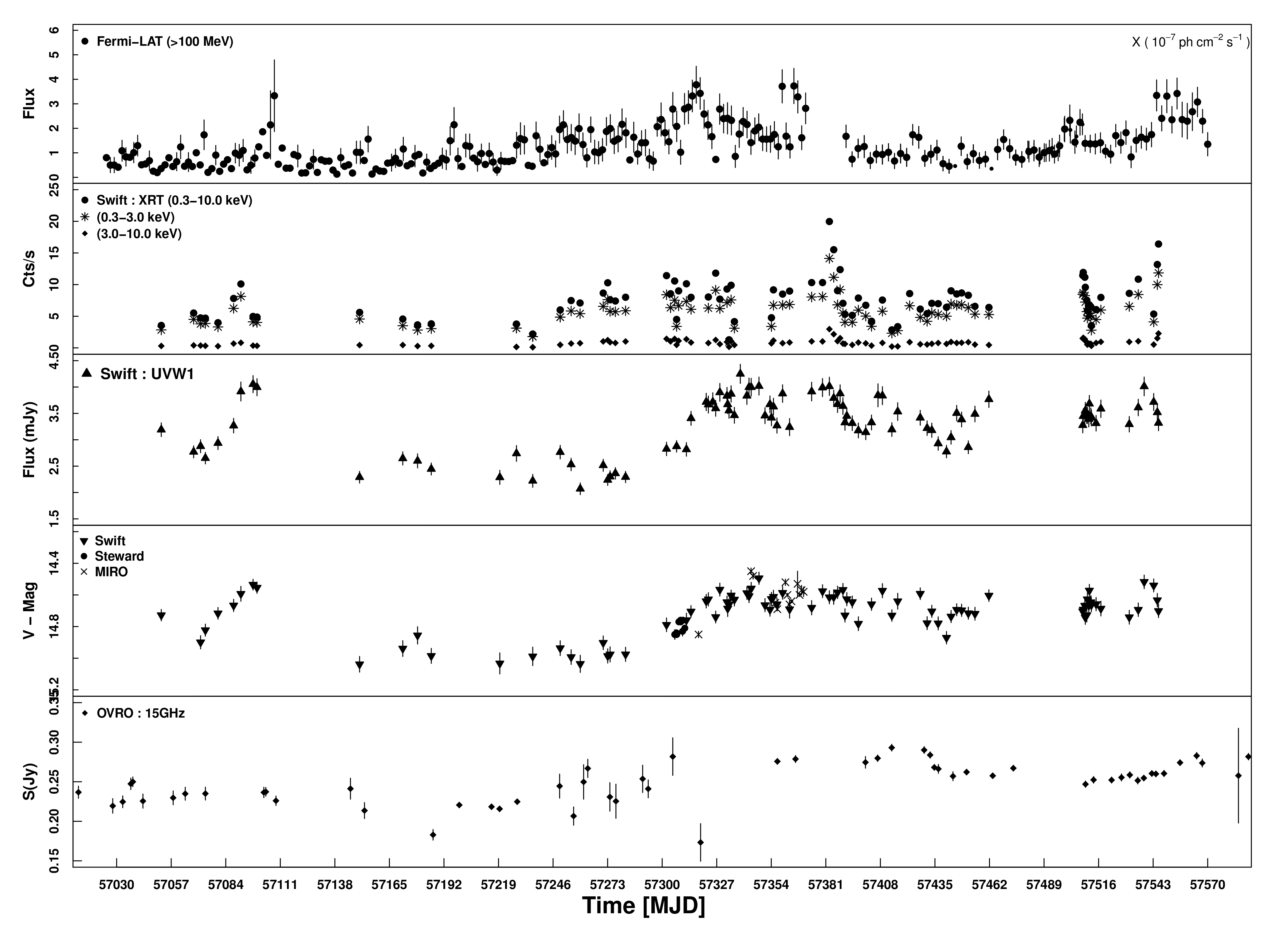
Multi-wavelength light curves of 1ES 1959+650 from January 2015 to June 2016. From top: Fermi-LAT gamma-ray flux (0.1–300 GeV), Swift-XRT flux in three X-ray bands, Swift-UVOT UV (UVW1) flux, combined Swift-UVOT/MIRO/Steward Observatory V-band optical flux, and OVRO 15 GHz radio flux.

Kaur, Chandra, Baliyan, Sameer & Ganesh 2017, ApJ, 846, 158

Multi-wavelength Study of Flaring Activity in HBL 1ES 1959+650 during 2015–2016

I contributed optical photometric monitoring data from the Mount Abu InfraRed Observatory as part of this multi-wavelength study. Using the 1.2-m and 0.5-m MIRO telescopes alongside Fermi-LAT, Swift-XRT/UVOT, Steward Observatory, and OVRO radio data, we characterize the extreme flaring activity of the high-energy-peaked BL Lac object 1ES 1959+650 during two major outbursts in March and October 2015 — among the brightest X-ray states ever recorded for this source, reaching count rates exceeding 20 counts/s. Optical follow-up during the October 2015 outburst showed a hint of intra-night variability alongside significant short-term variability correlated with the gamma-ray behavior. Using the time lag between optical and UV variations as a proxy for the synchrotron cooling timescale (2.34 hr), we estimate a jet magnetic field strength of 4.21 G, while the shortest variability timescales in the gamma-ray and optical bands place upper limits of ~1016 cm on the sizes of their respective emission regions. Quasi-simultaneous flux enhancements in the radio and very-high-energy gamma-ray bands point to a fresh injection of relativistic plasma into the jet interacting with a standing shock, producing correlated multi-wavelength emission across the electromagnetic spectrum.

Publications

My full publication list is available here.

Grants

Principal / Co-Principal Investigator

2026 — HST Program 18465, PI (Cycle 34)

Ground Truth for the CGM: A Cloud-by-cloud Ionization Modeling Challenge with pc-scale CGM Simulations

2025 — HST Program 18146, PI (Cycle 33)

A Complete Characterization of Multiphase Circumgalactic Gas in the Cosmic Afternoon through Forward Modeling

2021 — HST Program 16607, Co-PI (Cycle 29)

Is There a Relationship Between the Metallicity of the Circumgalactic Medium and the Galaxy Orientation?

Co-Investigator

2026 — MUSE Program, Co-I (P117)

Connecting Emission to Absorption: How Far Do Outflows Extend?

2025 — HST Program 18053, Co-I (Cycle 33)

The Size Scale and Baryonic Content of Low Redshift Intergalactic Absorbers

2024 — HST Program 17862, Co-I (Cycle 32)

Illuminating the Dark Ages of Metal Evolution: An HST Legacy Survey at Cosmic Noon

2022 — GBT Program 22B-350, Co-I

Project AMIGA: The Circumgalactic Medium of M31 — Mapping the Inner Halo

2022 — HST Program 17051, Co-I (Cycle 30)

A ULLYSES Survey of the Magellanic Clouds: A Laboratory for the Physics of Interfaces between Hot and Cold Gas

TALKS & COLLOQUIA

Invited Talk Nov 18, 2025

Charting Circumgalactic Media using Metal Absorption across Cosmic History University of Oklahoma, OK

Contributed Talk Jul 24, 2025

Project AMIGA: Physicochemical Properties of the Circumgalactic Gas of Andromeda Galaxy IUCAA, India

Invited Talk Jul 18, 2025

Project AMIGA: Physicochemical Properties of the Circumgalactic Gas of Andromeda Galaxy Osmania University, Hyderabad

Galaxy Group at UMich Mar 27, 2025

Galaxies Seminar University of Michigan, MI

ND Astro Seminar Mar 25, 2025

Astrophysics Seminar University of Notre Dame, IN

Discussion Lead - Bridging CGM observations and simulations Sept 11, 2024

A Holistic Understanding of the Multi-scale, Multiphase CGM Aspen Center for Physics, CO

Discussion Lead - Cold Gas in the CGM Sept 10, 2024

A Holistic Understanding of the Multi-scale, Multiphase CGM Aspen Center for Physics, CO

Participant Sept 1-15, 2024

A Holistic Understanding of the Multi-scale, Multiphase CGM Aspen Center for Physics, CO

Contributed Talk Aug 21, 2024

Resolving the CGM in Theory & Observations Harvard University, MA

Participant Jul 15-19, 2024

Code/Astro Northwestern University, IL

Contributed Talk May 07, 2024

FOGGIE Retreat Michigan State, MI

Invited Talk Feb 20, 2024

Astro Seminar University of Washington, WA

ND Astro Seminar Oct 31, 2023

Astrophysics Seminar University of Notre Dame, IN

Contributed Talk Feb 21, 2023

Structure of the Circumgalactic Medium Arizona State University, AZ

ND Astro Seminar Nov 22, 2022

Astrophysics Seminar University of Notre Dame, IN

Dissertation Talk June 16, 2022

AAS 240 Meeting Pasadena Convention Center, CA

Dissertation Defense June 10, 2022

Department Talk Penn State

Invited Talk January 27, 2022

Carnegie Tea Talk Carnegie Science Observatories

Contributed Talk November 5, 2021

STARs Lab Meeting Online, Arizona State University

Contributed Talk October 15, 2021

Milky Way Halo Research Group Meeting Online, STScI

Contributed Talk September 21, 2021

Lunch Talk Online, Penn State

Invited Talk August 19, 2021

Baltimore Winds Workshop Johns Hopkins University

Contributed Talk April 5, 2021

Galread Extragalactic Discussion Group Online, Princeton University

Contributed Talk March 25, 2021

High Energy Astro Group Seminar Online, MIT

Tutorial contributor & presenter Jan 20, 2021

Fundamentals of Gaseous Halos Workshop Online, UCSB

Invited Talk Oct 29, 2020

Data Science Consortium Online, University of Michigan

Department Colloquium June 19, 2020

Astronomy & Astrophysics Department Online, New Mexico State University

Please leave a message below or email to sameer (at) nd (dot) edu, and I will email you back as soon as possible! For alternate contact methods, please use the links at the bottom.

Contact